


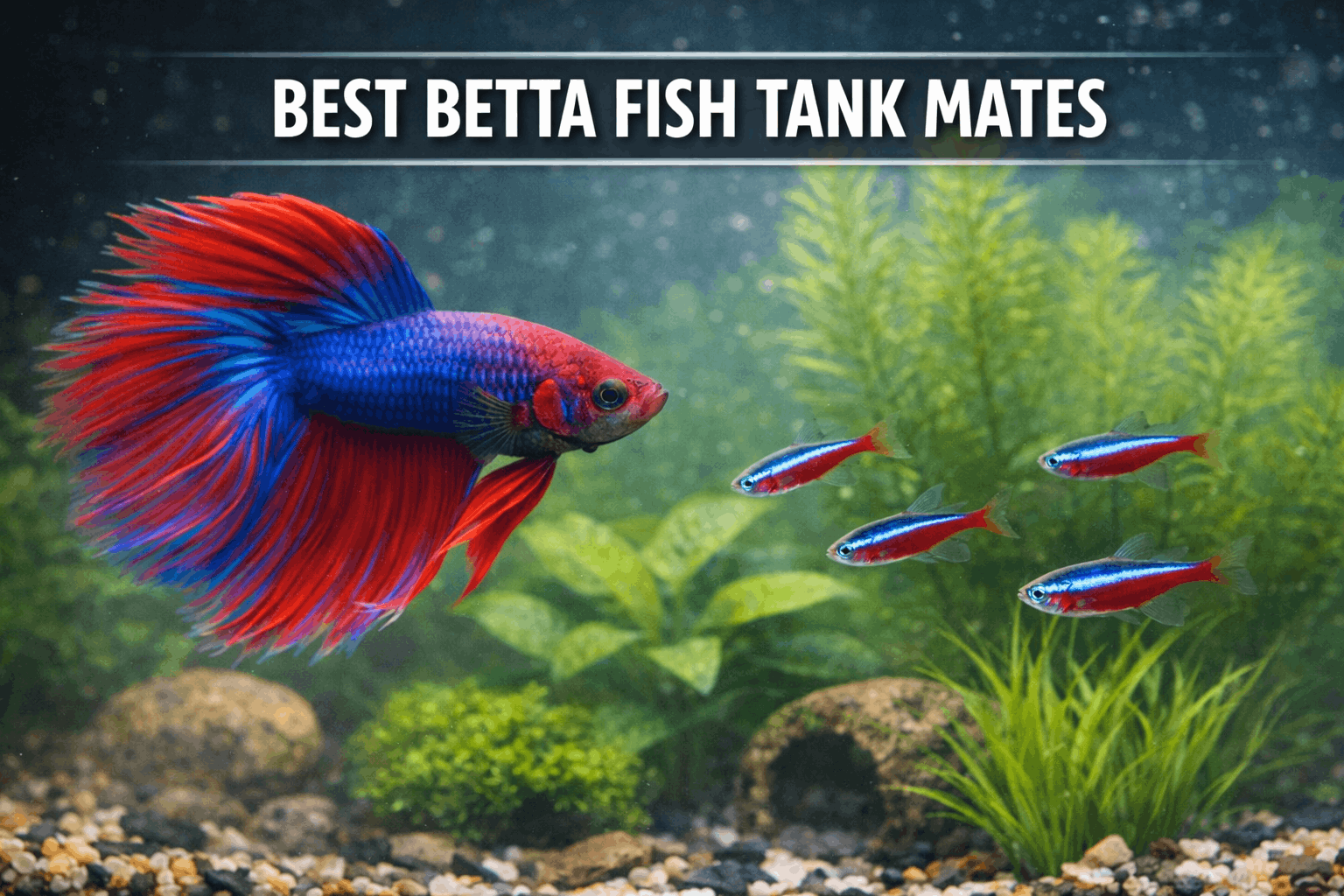
The Legend of the “Fighting Fish”
I remember the first time I saw a Betta and I was amazed by those long, flowing fins and that bright, angry “flare” they do when they see a mirror. I was told that Bettas are “warriors” and must always live alone in a small bowl. For a long time, I believed that. I thought that if I put any other creature in the tank, it would be a disaster.
But as I spent more years in the hobby, I realized that Bettas are much more complicated than people think. Yes, they are territorial, but they aren’t always “mean.” In the wild, they live in big rice paddies and ponds full of other fish. In your home, they can actually live in a peaceful community if—and this is a big “if”—you follow the right rules.
I want to help you move away from the idea that your Betta has to be a prisoner in a tiny tank. If you have the right setup, you can create a vibrant, living world where your Betta is the star, but not the only resident.
Rule #1: The Size of the House Matters
Before I tell you which fish to buy, I have to be very honest with you. You cannot have tank mates in a 5-gallon tank. I know many starter kits are 5 gallons, and they are great for just a Betta. But if you want to add friends, you need at least 10 gallons, and 20 gallons is even better. Why?
-
Space to Hide: In a small tank, your Betta will feel like the other fish are invading his personal space. This makes him stressed and angry.
-
The “Poop” Problem: More fish means more waste. A small filter in a 5-gallon tank cannot keep up with the mess of multiple fish.
If your budget is less, I suggest waiting until you can get a 10-gallon tank before you try to find roommates for your Betta.
Rule #2: The “Mirror” Rule
Bettas are triggered by how a fish looks. If a fish looks like another Betta, your fish will attack it.
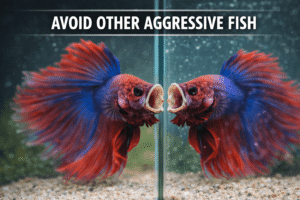
I follow three simple guidelines when picking neighbors:
-
Avoid Bright Colors: If you put a bright red or blue fish in the tank, your Betta might think it’s a rival male.
-
Avoid Long Fins: This is why I never put Fancy Guppies with Bettas. Those big tails look too much like a Betta’s tail, and it causes a fight.
-
Avoid “Nippers”: Some fish, like Tiger Barbs, love to bite long fins. Your Betta is a slow swimmer, and he will get bullied by fast, nippy fish.
Rule #3: The “Level” Strategy
In my experience, the best tank mates are those that stay in a different part of the tank. Bettas usually hang out at the top of the water because they like to breathe air from the surface.
If you pick fish that stay at the bottom, they will almost never run into each other. It’s like living in a two-story apartment building—everyone has their own floor!
My Top 5 Favorite Roommates for Bettas
1. Mystery Snails (The Best Choice)
If you are a beginner, this is where I want you to start. Mystery Snails are fantastic. They are peaceful, they don’t look like fish, and they do a great job cleaning the glass.
-
Why they work: They have a hard shell. If your Betta gets grumpy and tries to peck at them, the snail just pulls into its shell, and the Betta gets bored and swims away.
-
Mentor Tip: Make sure you feed your snail! They won’t live on just algae. I give mine a little piece of a “sinking wafer” every other day.
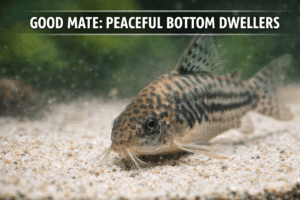
2. Corydoras Catfish (The Bottom Puppies)
These are my favorite bottom-dwelling fish. They have little “whiskers” and they spend all day sniffing the sand for food.
-
Why they work: They stay at the very bottom. They are also very fast. If the Betta tries to chase them, they zip away before he can even blink.
-
Important: Corydoras like to have friends. You should get a group of at least 3 or 4.
3. Ember Tetras (The Tiny Orange Glow)
If you want a “school” of fish that stays together, Ember Tetras are great. They stay very small (less than an inch).
-
Why they work: They are orange, which is usually a safe color that doesn’t make Bettas angry. They are also very “chill” and don’t nip at fins.
-
Aquadolf Advice: You need a group of at least 6. When they are in a group, they feel safe.
4. Kuhli Loaches (The “Water Noodles”)
These are very funny-looking fish. They look like tiny, striped snakes or noodles.
-
Why they work: They are nocturnal. That means they sleep during the day when your Betta is awake, and they come out at night when your Betta is sleeping. They almost never interact!
-
Requirements: They love to hide. I make sure to have lots of caves or PVC pipes for them to sleep in during the day.
5. Ghost Shrimp (The Invisible Crew)
Shrimp are a bit of a gamble, but Ghost Shrimp are cheap and almost invisible.
-
Why they work: Because they are “clear,” many Bettas don’t even see them. They are excellent at cleaning up extra fish food.
-
Warning: Some Bettas are “hunters.” If your fish is very aggressive, he might try to eat the shrimp. I always say: don’t buy shrimp unless you are okay with them potentially becoming an expensive snack!
How to Introduce New Friends?
You can’t just drop new fish into your Betta’s tank. He will see them as “intruders” in his home. Here is exactly how I do it to keep everyone safe.
Step 1: Rearrange the Furniture
Before you bring the new fish home, move your plants and decorations around. This makes the tank look “new” to the Betta. He will be so busy exploring the new layout that he will forget he “owns” the whole tank.
Step 2: The Floating Bag
Put the new fish in their bag and let it float in the tank for 20 minutes. Watch your Betta’s body language. Is he “flaring” (opening his gills) and attacking the bag? Or is he just curious?
Step 3: Lights Out
When you finally let the new fish out of the bag, turn off the aquarium lights. This keeps everyone calm. I usually leave the lights off for 3 or 4 hours so the new fish can find a hiding spot.
Step 4: The “Full Belly” Trick
I always feed my Betta his favorite meal right before I add new fish. A fish with a full stomach is a much lazier and happier fish!
3 Things That Will Cause a Fight
I want to warn you about three things that I have seen cause a “fish war” in many tanks.
-
Not Enough Hiding Spots: If the tank is empty, the fish have to look at each other all day. This causes stress. I use lots of Live Plants like Java Fern to create “walls” so the fish can have some privacy.
-
Feeding Time: This is when fights happen most. Bettas are “pigs” and will try to eat everyone else’s food. I use a “feeding ring” for the Betta on one side and drop sinking food for the snails/catfish on the other side.
-
The “Grumpy” Betta: Sometimes, you just have a fish that is mean. It’s not your fault, and it’s not the fish’s fault—it’s just his personality. If you see your Betta constantly chasing and biting, you must have a “Plan B.” This means having a separate bowl or tank ready to move the other fish into.
Dolf and the Blue Shrimp
I once had a beautiful blue Betta (the namesake of this site, Dolf). He was very calm, so I decided to buy five bright blue “Dream Shrimp.” They were expensive, but I thought they would look great together.
I put them in, and for two hours, everything was fine. But because the shrimp were the same color as Dolf, he eventually decided they were “invaders.” I watched as he slowly hunted every single one. I felt terrible!
What I learned: Never match the color of the tank mate to the color of the Betta. If I had bought “Ghost Shrimp” (which are clear), Dolf probably would have ignored them. This is why I share these stories with you—so you don’t make the same expensive mistakes I did!
Conclusion: A Happy, Healthy Kingdom
Keeping a Betta in a community tank is one of the most rewarding things you can do in this hobby. It is so peaceful to see a Betta swimming through a forest of plants alongside a group of Corydoras or a busy Snail. It makes the tank feel like a real slice of nature.
Remember, the secret to success is Patience, Space, and Observation. Start with a Snail, watch how your Betta reacts, and slowly build your community. If you take it one step at a time, you will have a beautiful, peaceful tank that you can enjoy every day.
If you have a Betta and you are thinking about a specific tank mate, tell me about it in the comments! I would love to hear about your fish and give you my personal advice.