
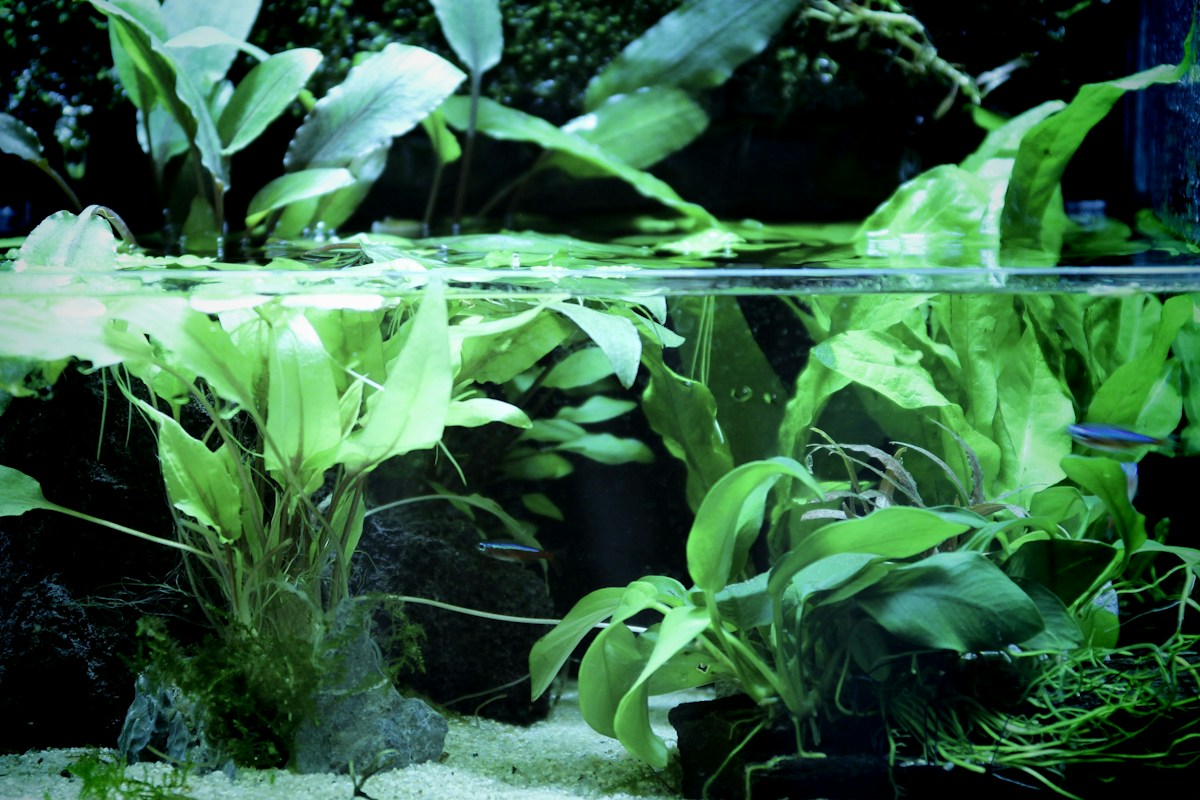
Aquatic macrophytes derive their structural vitality, photosynthetic vigor, and long-term reproductive stability from the physical and chemical composition of the substrate bed. In closed aquarium ecosystems, the benthic foundation is far more than an anchor for plant roots; it serves as a massive biochemical reactor governing cation-exchange capacity, localized nutrient mineralization, microbial redox potentials, and root rhizosphere respiration.
Novice aquarists frequently commit the critical mistake of pouring a single homogeneous layer of decorative sand or unbuffered gravel across the aquarium bottom, wondering why demanding stem plants and heavy root feeders subsequently stall, melt, or succumb to invasive cyanobacteria. Single-substrate beds invariably compact over time, choking off hydraulic flow and inducing toxic anaerobic stagnation within the root zone.
High-performance aquascaping demands an engineered layering protocol that replicates the natural alluvial geology of fertile tropical riverbeds. By establishing distinct structural tiers ranging from highly porous volcanic mineral gravels at the base to nutrient-dense active soils and protective inert top dressings, the aquarist creates a dynamic hydrological and nutrient gradient.
Implementing a scientific substrate layering architecture prevents premature substrate exhaustion, facilitates beneficial colonization by heterotrophic mycorrhizal microbes, stabilizes acidic root-zone chemistry, and ensures vibrant botanical growth across years of continuous cultivation.
The Hydrodynamic Foundation: Volcanic Lava Pumice and Porous Base Gravels
The deepest geological tier of an engineered substrate bed must prioritize physical porosity and hydrodynamic permeability over immediate nutrient density. When fine soils or dense sands are placed directly onto smooth glass bottoms, the sheer weight of the overlying water column compacts the grains, eliminating interstitial void spaces.
Without void spaces, passive water circulation through the substrate ceases completely. Heterotrophic bacteria rapidly consume localized dissolved oxygen, driving the redox potential into negative millivolt territory and creating anaerobic pockets where sulfate-reducing bacteria generate toxic hydrogen sulfide ($) gas.
To eliminate this compaction hazard, the base foundation should consist of a 1.0 to 1.5 inch layer of crushed volcanic lava pumice or specialized sintered porous ceramic granules (grain size 8 to 15 mm). These lightweight volcanic minerals feature an expansive network of microscopic internal vesicles, providing immense surface area for aerobic bio-filtration while guaranteeing perpetual convective water circulation through the bottom of the tank.
Research published by the Aquatic Gardeners Association highlights that convective flow driven by slight thermal gradients between heated water and the cooler room environment keeps substrate roots oxygenated, preventing crown rot in heavy root-feeding species such as *Cryptocoryne* and *Echinodorus*.
Bacteriological Priming and Humic Acid Amendments
Before capping the volcanic base, modern aquascaping protocols dictate the introduction of concentrated biological and mineral amendments. Sprinkling powdered volcanic tourmaline, active humic and fulvic acids, and dormant endomycorrhizal bacterial spores directly onto the pumice jump-starts benthic ecology.
Humic acids serve as natural chelators, binding free iron and manganese ions and holding them in bioavailable, non-oxidized states readily absorbed by nascent root hairs. Microbial inoculants break down dead root sheaths and organic detritus, recycling bound phosphates back into plant-available orthophosphates.
Active Soil Chemistry: Cation Exchange Capacity (CEC) and pH Buffering
The core middle tier consists of manufactured active aquasoil, produced by pelletizing and kiln-firing natural dark volcanic humus and organic clay soils. Unlike inert gravels or cosmetic quartz sand, active aquasoils possess an extraordinarily high Cation Exchange Capacity (CEC).
Cation Exchange Capacity measures the substrate capacity to attract, hold, and exchange positively charged nutrient ions (cations) such as potassium (^+$), ammonium (^+$), calcium (^{2+}$), and magnesium (^{2+}$). The negatively charged clay-humus particles act as nutrient reservoirs, stripping dissolved fertilizers from the water column and storing them directly at the root zone where algae cannot access them.
Furthermore, active soils naturally release humic substances that actively absorb carbonate ions (^{2-}$), suppressing carbonate hardness ($) to near-zero levels and stabilizing the rhizosphere pH in a slightly acidic range between 5.8 and 6.5. In this acidic micro-climate, toxic unionized ammonia ($) is instantly converted into harmless ammonium (^+$), the preferred nitrogen source for aquatic plants.
Strategic Powder Dusting and Substrate Grading
To facilitate the delicate root development of micro-carpeting species such as *Glossostigma elatinoides*, *Hemianthus callitrichoides* ‘Cuba’, and *Micranthemum* ‘Monte Carlo’, a specialized fine-powder active soil must cap the standard soil layer.
Standard aquasoil granules measure between 2.0 and 4.0 mm, which can present physical voids too large for microscopic carpeting plant runners to grip securely. Adding a 0.5-inch layer of fine powder soil (grain size 1.0 to 1.5 mm) provides dense, cohesive root anchorage, preventing fragile carpets from detaching and floating to the surface under buoyant oxygen pressures.
Inert Cosmetic Sand Caps: Segregation and Barrier Techniques
In contemporary Nature Aquarium designs, aquarists frequently combine active plant soils in raised rear planting terraces with cosmetic inert sands (such as cosmetic Colorado, La Plata, or river sand) in the foreground to create negative space, flowing stream beds, or pathways.
Combining active soils and inert sands presents a severe maintenance challenge: over time, bottom-dwelling fauna, shrimp foraging, and maintenance siphon currents cause the dark aquasoil granules to spill into and ruin the bright cosmetic sand. Preventing this intermixture requires structural physical barriers.
Aquarists deploy corrugated plastic baffle strips, strategically positioned hardscape stones sealed with aquarium-safe cyanoacrylate gel, and permeable aquatic mesh dividers between the distinct substrate zones. Furthermore, inert sands should never be poured directly over active soils as a full top cap; doing so traps volatile gases, restricts gas exchange, and compromises the natural pH buffering action of the underlying active granules.
Managing Initial Nutrient Surges and Ammonia Cycling
Freshly manufactured active aquasoils are richly fortified with organic nitrogen compounds and mineral nutrients during production. Upon initial submersion, these soils experience a substantial nutrient leaching phase, dumping significant concentrations of ammonium, nitrates, and dissolved organic carbon into the water column over the first three to four weeks.
Failure to manage this initial nutrient surge invariably sparks devastating blooms of diatoms, green water, and filamentous hair algae. Successful protocols require frequent large water changes (50 percent every two days during week one, tapering to twice weekly during weeks two and three) until nitrification stabilizes and aquatic plant mass transitions from emersed to submerged growth forms.
Selecting and layering substrate components requires precise tailoring to target plant classifications and livestock sensitivities. The matrix below outlines optimal substrate architectures for specific planted tank disciplines.
Planted Aquarium Substrate Layering Architecture Matrix
| Aquascape Discipline | Base Foundation Tier | Core Nutrient Tier | Surface Cap Tier | CEC / Buffering Profile |
|---|---|---|---|---|
| High-Tech Dutch Style | Porous Lava Pumice + Peat | Dense Active Aquasoil (3-4 inches) | Fine Powder Active Soil | Maximum CEC / Strong Acid Buffering |
| Iwagumi Carpeting Layout | Graded Pumice + Bacter 100 | Standard Aquasoil (Sloped) | Micro Powder Soil (1.0 mm) | High CEC / Rapid Rhizosphere Anchorage |
| Nature Aquarium with Sand Path | Volcanic Gravel in Mesh Bags | Terraced Active Soil Behind Stone | Natural Cosmetic Sand (Forefront) | Zoned CEC / Dual Parameter Balance |
| Low-Tech Cryptocoryne Biotope | Mineralized Topsoil Base | Clay Humus + Iron Amendment | Natural River Quartz Gravel (2-3 mm) | Moderate CEC / Neutral Stability |
| Neocaridina / Planted Hybrid | Porous Ceramic Media Base | Inert Calcined Clay Granules | Inert Fine Black Quartz Sand | Low CEC / Zero KH Depletion |
Proper substrate construction ensures optimal biological health and ease of plant maintenance. Review the essential operational inquiries below.
Frequently Asked Questions About Planted Aquarium Substrates
What is Cation Exchange Capacity (CEC) and why does it matter?
Cation Exchange Capacity is the substrate ability to bind positively charged nutrient ions like potassium, calcium, and ammonium. High CEC substrates capture dissolved fertilizer ions from the water and store them in the root zone, feeding plants while denying nutrients to free-floating algae.
Can you reuse active aquasoil from an old aquarium setup?
Old aquasoil can be reused if the physical granules remain intact and have not broken down into fine mud. However, its chemical buffering capacity and nutrient reserves will be largely exhausted, requiring supplementation with root fertilizer tabs.
Why do active soils lower aquarium pH and KH?
Active aquasoils are manufactured from natural organic humic clays containing abundant hydrogen exchange sites. These sites actively adsorb calcium and carbonate ions from the water column, lowering KH and stabilizing the pH between 5.8 and 6.8.
How thick should the total substrate layer be?
A balanced planted aquarium substrate should measure approximately two inches in the front viewing area and slope gradually upward to four or five inches at the rear. This slope enhances depth perception while providing ample root anchoring volume for large stem plants.
What happens if you do not rinse decorative sand before capping?
Unwashed decorative sands contain immense volumes of microscopic quartz dust and silt. Pouring unrinsed sand into an aquarium causes severe, persistent water cloudiness that can clog mechanical filter impellers and irritate fish gill membranes.
Should active aquasoil ever be gravel vacuumed?
No, deep gravel vacuuming crushes soft aquasoil granules into fine mud and destroys the beneficial biological stratification. Only light surface vacuuming using a gentle siphon should be performed to lift loose surface detritus.
Why is volcanic pumice recommended as the lowest substrate tier?
Porous volcanic pumice prevents compaction, maintains hydraulic water circulation through the base of the tank, and prevents the formation of anaerobic dead zones that generate toxic hydrogen sulfide gas.
How do you prevent aquasoil from mixing into decorative cosmetic sand?
Use structural barriers such as thin plastic divider strips, interlocking hardscape rocks glued with aquarium-safe cyanoacrylate, or placing the base aquasoil inside mesh media zipper bags behind the hardscape perimeter.
How long does the active buffering capacity of aquasoil last?
In setups using tap water with moderate carbonate hardness, aquasoil typically exhausts its buffering capacity within 12 to 18 months. When using pure reconstituted RO water with zero KH, the active buffering lifespan extends beyond two to three years.
Strategic Conclusion and Benthic Ecosystem Mastery
Constructing a high-performance planted aquarium begins with engineering the benthic substrate architecture. Treating the substrate as an active thermodynamic and biological engine rather than mere inert decoration ensures lush vegetative growth, resilient root development, and unmatched chemical stability. By harmonizing base pumice permeability, active soil nutrient retention, and delicate powder capping, the modern aquarist builds an enduring ecological masterpiece.
To explore further peer-reviewed studies on aquatic plant agronomy and rhizosphere physiology, examine research publications at the University of Florida Center for Aquatic and Invasive Plants, technical papers from the Aquatic Gardeners Association, and limnological indices compiled by the FishBase Consortium.