

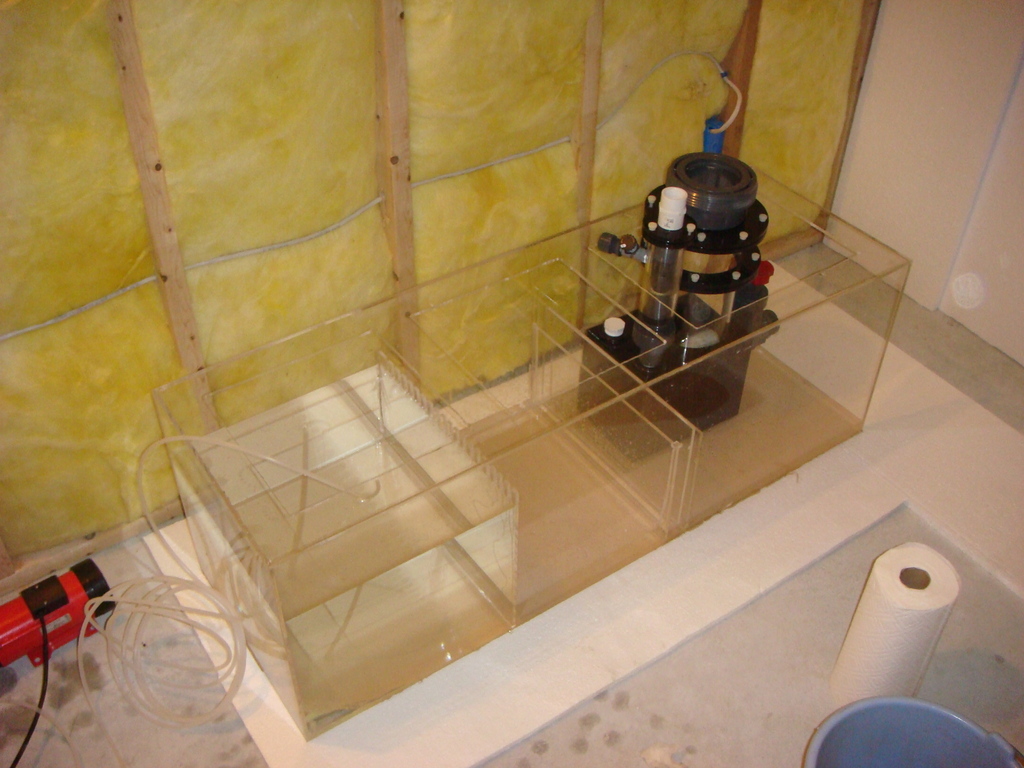
For large display aquariums (75 to 300+ gallons) and heavily stocked monster fish tanks, standard canister filters struggle to handle massive waste loads. The ultimate solution in filtration engineering is a dedicated **Under-Tank Sump Filter**. Adding 20 to 50 gallons of total water volume, sumps house colossal biological media beds, hide bulky heaters and probes out of sight, and maintain a 100% constant water level in the main display tank.
Fluid dynamics and aquaculture engineering manuals from the FAO Aquaculture Technical Papers prove that moving-bed biofilm reactors (MBBR) using fluidized K1 media self-clean continuously while delivering unrivaled nitrification capacity.
The 4 Chamber Layout of a High-Performance Freshwater Sump
- 1. Inflow & Mechanical Fleece Chamber: Water enters from silent BeanAnimal overflows through 200-micron filter socks or automatic motorized roller mats.
- 2. Fluidized Moving Bed (K1/K3 Media): Aerated with dedicated air stones, keeping buoyant plastic bio-wheels in perpetual fluid motion to slough off dead biofilms.
- 3. Static High-Porous Sintered Ceramic Bed: Houses submerged ceramic blocks or Seachem Matrix for deep anaerobic denitrification.
- 4. Return Pump & Auto-Top-Off (ATO) Chamber: Submersible DC return pump with optical water level sensors that automatically replenish evaporated water.
Canister Filter vs Custom Under-Tank Sump Filtration
| Filtration Attribute | Custom Multi-Chamber Sump | High-End Canister Filter | Aquarium Advantage |
|---|---|---|---|
| Effective Bio-Media Volume | 15 – 40+ Liters | 4 – 8 Liters | Handles extreme bioloads with zero ammonia spikes |
| Total System Water Volume | +25% to +40% added volume | Negligible (Canister volume only) | Buffers water parameters against rapid fluctuations |
| Equipment Concealment | 100% In-Sump (Heaters, CO2 diffusers, probes) | Visible inside display tank | Delivers immaculate aquascape aesthetics |
Frequently Asked Questions (FAQ)
How do I prevent a sump from overflowing during a power outage?
Calculate sump reserve capacity and drill an anti-siphon siphon-break hole on the return pipe 0.5 inches below the normal display water line.
What is a BeanAnimal overflow?
A fail-safe 3-pipe drain design (Full siphon, Open channel, and Dry emergency) that operates completely silent and handles drain clogs without flooding.
Strategic Conclusion and Key Takeaways
A custom sump is the gold standard for large freshwater aquarium filtration. Expanding water volume and housing massive biological media arrays guarantees pristine water parameters and effortless maintenance.
Advanced Water Chemistry Dynamics and Osmoregulatory Physiology
Maintaining biological and chemical equilibrium in closed aquatic biotopes demands an in-depth understanding of cellular osmoregulation, nitrogen compound transformation, and microbial biofilm mechanics. In wild tropical river systems, immense water volumes continually dilute metabolic byproducts and replenish vital mineral ions. In the home aquarium, however, the keeper is entirely responsible for sustaining this delicate biochemical balance.
According to limnological research published by the University of Florida Fisheries and Aquatic Sciences and guidelines from the Aquatic Gardeners Association, sudden osmotic fluctuations induce severe stress on freshwater organisms. Fish and dwarf invertebrates expend significant metabolic energy actively pumping ions across gill membranes to maintain cellular homeostasis. When general hardness ($GH$), carbonate buffering ($KH$), or total dissolved solids ($TDS$) swing rapidly, this osmoregulatory capacity collapses, leading to chronic stress, suppressed immune function, and vulnerability to opportunistic pathogens.
The Biochemical Mechanics of Aerobic Nitrification and Gas Exchange
Within the filtration matrix, billions of specialized autotrophic chemolithotrophs—principally *Nitrosomonas* and *Nitrospira*—colonize porous sintered glass and ceramic substrates. These microorganisms convert toxic unionized ammonia ($NH_3$) into nitrite ($NO_2^-$), and subsequently into relatively benign nitrate ($NO_3^-$). This biological process consumes dissolved oxygen and carbonate hardness, releasing hydrogen ions ($H^+$) that naturally acidify the water column over time.
Aquarists must actively counteract this acidification by ensuring adequate water-column circulation, surface gas agitation, and consistent remineralization routines. Without sufficient carbonate buffering, the continuous acid production exhausts available reserves, precipitating catastrophic pH crashes that stall bio-filtration and endanger aquatic livestock.
Standard Operating Procedures: Maintenance, Nutrition, and Ecological Stability
Sustaining long-term vitality across high-tech planted aquascapes, specialized breeding colonies, and delicate softwater community setups requires strict adherence to standardized husbandry protocols. Routine maintenance should not be viewed as reactive chore work, but rather as preventative ecological stewardship that preserves the system’s baseline stability.
Weekly Preventative Maintenance Checklist
- 1. Debris Extraction and Mechanical Pre-Filter Rinsing: Gently rinse mechanical filter foams and replace polishing floss in discarded aquarium water to prevent trapped particulate waste from decomposing into dissolved organic carbon (DOC).
- 2. Parameter Verification: Test key parameters using calibrated liquid reagent kits (or digital probes for pH and TDS). Ensure that total ammonia and nitrites remain at absolute zero ($0.0$ ppm) and nitrates do not exceed target biotope thresholds.
- 3. Temperature and Flow Calibration: Inspect submersible heaters, electronic temperature controllers, and filter outflow nozzles to confirm optimal circulation and prevent localized thermal stratification or stagnant dead spots.
- 4. Tailored Micro and Macronutrient Supplementation: Adjust liquid fertilizer dosages based on plant growth density, light intensity, and CO2 saturation levels to prevent both nutrient depletion and opportunistic algae outbreaks.
Nutritional diversity is equally paramount for ornamental livestock. Combining high-protein live and frozen foods (such as freshly hatched baby brine shrimp, daphnia, and bloodworms) with carotenoid-rich spirulina flakes and sinking insect-meal granules ensures complete dietary amino acid profiles, enhanced disease resistance, and vibrant natural coloration.
Troubleshooting Common Husbandry Pitfalls and Biosecurity Safeguards
Even seasoned aquarists occasionally encounter environmental imbalances, sudden water clarity issues, or pathogen introductions. Establishing robust biosecurity safeguards and knowing how to diagnose root causes systematically prevents localized anomalies from cascading into total tank failure.
Diagnostic Analysis of Common Aquarium Challenges
When biological imbalances arise, aquarists should evaluate system parameters against the following diagnostic framework:
- Cloudy or Milky Water (Bacterial Bloom): Typically caused by a rapid increase in heterotrophic bacteria feeding on excess dissolved organic waste or a freshly cycling filter. Avoid massive water changes, as this continually feeds new micronutrients to the bloom; instead, run high aeration, reduce feeding, and allow nitrifying colonies to reach equilibrium over 3 to 5 days.
- Persistent Algae Outbreaks: Green dust algae, hair algae, and diatoms are symptoms of an imbalance between light intensity, photoperiod duration, carbon availability, and nutrient uptake. Reducing lighting duration to 7 hours, stabilizing CO2 injection, and increasing fast-growing stem plant biomass naturally outcompetes algal spores.
- Lethargy and Clamped Fins: Often the first behavioral indicator of osmotic shock, temperature fluctuations, or undetectable chemical contaminants (such as household aerosols or residual tap water chloramines). Perform an immediate 30% water change with properly conditioned, temperature-matched water and inspect all filtration components.
By pairing systematic troubleshooting with strict quarantine protocols for all new livestock and plants, aquarists create resilient, flourishing aquatic ecosystems that provide endless beauty and scientific fascination for years to come.
Advanced Water Chemistry Dynamics and Osmoregulatory Physiology
Maintaining biological and chemical equilibrium in closed aquatic biotopes demands an in-depth understanding of cellular osmoregulation, nitrogen compound transformation, and microbial biofilm mechanics. In wild tropical river systems, immense water volumes continually dilute metabolic byproducts and replenish vital mineral ions. In the home aquarium, however, the keeper is entirely responsible for sustaining this delicate biochemical balance.
According to limnological research published by the University of Florida Fisheries and Aquatic Sciences and guidelines from the Aquatic Gardeners Association, sudden osmotic fluctuations induce severe stress on freshwater organisms. Fish and dwarf invertebrates expend significant metabolic energy actively pumping ions across gill membranes to maintain cellular homeostasis. When general hardness ($GH$), carbonate buffering ($KH$), or total dissolved solids ($TDS$) swing rapidly, this osmoregulatory capacity collapses, leading to chronic stress, suppressed immune function, and vulnerability to opportunistic pathogens.
The Biochemical Mechanics of Aerobic Nitrification and Gas Exchange
Within the filtration matrix, billions of specialized autotrophic chemolithotrophs—principally *Nitrosomonas* and *Nitrospira*—colonize porous sintered glass and ceramic substrates. These microorganisms convert toxic unionized ammonia ($NH_3$) into nitrite ($NO_2^-$), and subsequently into relatively benign nitrate ($NO_3^-$). This biological process consumes dissolved oxygen and carbonate hardness, releasing hydrogen ions ($H^+$) that naturally acidify the water column over time.
Aquarists must actively counteract this acidification by ensuring adequate water-column circulation, surface gas agitation, and consistent remineralization routines. Without sufficient carbonate buffering, the continuous acid production exhausts available reserves, precipitating catastrophic pH crashes that stall bio-filtration and endanger aquatic livestock.
Standard Operating Procedures: Maintenance, Nutrition, and Ecological Stability
Sustaining long-term vitality across high-tech planted aquascapes, specialized breeding colonies, and delicate softwater community setups requires strict adherence to standardized husbandry protocols. Routine maintenance should not be viewed as reactive chore work, but rather as preventative ecological stewardship that preserves the system’s baseline stability.
Weekly Preventative Maintenance Checklist
- 1. Debris Extraction and Mechanical Pre-Filter Rinsing: Gently rinse mechanical filter foams and replace polishing floss in discarded aquarium water to prevent trapped particulate waste from decomposing into dissolved organic carbon (DOC).
- 2. Parameter Verification: Test key parameters using calibrated liquid reagent kits (or digital probes for pH and TDS). Ensure that total ammonia and nitrites remain at absolute zero ($0.0$ ppm) and nitrates do not exceed target biotope thresholds.
- 3. Temperature and Flow Calibration: Inspect submersible heaters, electronic temperature controllers, and filter outflow nozzles to confirm optimal circulation and prevent localized thermal stratification or stagnant dead spots.
- 4. Tailored Micro and Macronutrient Supplementation: Adjust liquid fertilizer dosages based on plant growth density, light intensity, and CO2 saturation levels to prevent both nutrient depletion and opportunistic algae outbreaks.
Nutritional diversity is equally paramount for ornamental livestock. Combining high-protein live and frozen foods (such as freshly hatched baby brine shrimp, daphnia, and bloodworms) with carotenoid-rich spirulina flakes and sinking insect-meal granules ensures complete dietary amino acid profiles, enhanced disease resistance, and vibrant natural coloration.