


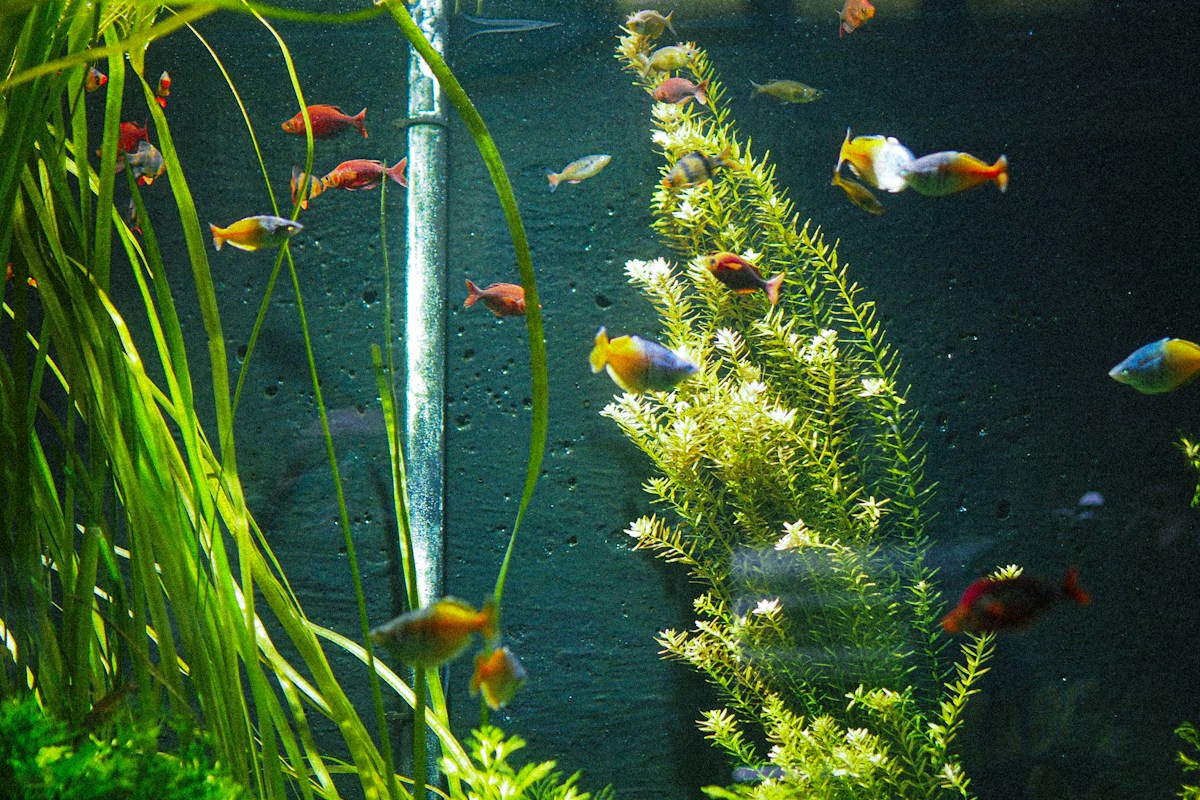
Maintaining precise thermal stability is fundamental to the biochemical equilibrium of closed aquatic ecosystems. Tropical fish species, sensitive aquatic invertebrates, and delicate aquatic macrophytes have evolved across millions of years within vast freshwater river basins where rapid temperature fluctuations do not occur. In a captive home aquarium, however, the relatively minuscule water volume renders aquatic inhabitants exceptionally vulnerable to rapid chilling or fatal thermal spikes when heating equipment fails.
Every physiological process in ectothermic aquatic life, including metabolic enzyme kinetics, immune response efficiency, and cellular respiration, is dictated directly by ambient water temperature. A sudden plunge in temperature dampens antibody synthesis and induces acute osmotic shock, leaving livestock prey to opportunistic parasites. Conversely, uncontrolled heating accelerates metabolic demand while simultaneously reducing dissolved oxygen saturation, triggering respiratory distress and biological filter collapse.
Aquarium heaters remain among the most critical yet statistically failure-prone pieces of life-support hardware in modern fishkeeping. Traditional glass submersible heaters rely on internal mechanical bimetallic contact strips that physically open and close across thousands of thermal cycles. Inevitably, electrical arcing welds these contact points shut, transforming the heater into an unyielding heating element that can boil an entire aquarium in hours.
Preventing catastrophic heating failures requires a proactive engineering mindset that moves beyond basic wattage guidelines. By implementing redundant temperature controllers, sizing heating elements strategically across dual units, optimizing fluid dynamics to eradicate thermal dead zones, and selecting robust materials like shatterproof titanium, aquarists can eliminate single points of failure and safeguard their aquatic ecosystems indefinitely.
Thermodynamic Fundamentals: Calculating True Aquarium Wattage Requirements
A persistent fallacy in beginner fishkeeping literature is the universal application of the rudimentary rule suggesting three to five watts per gallon. While this heuristic provides a basic starting point, it ignores critical thermodynamic variables including ambient room temperature differential, surface area evaporative cooling, aquarium tank material, and convective heat loss through external filtration equipment.
The true heating demand is dictated by the thermal delta, which represents the mathematical difference between the lowest anticipated room temperature and the target water temperature. An aquarium maintained at 78 degrees Fahrenheit in a climate-controlled room that never drops below 72 degrees Fahrenheit requires only a 6-degree differential. In contrast, an aquarium in an unheated room that plunges to 58 degrees Fahrenheit during severe winter storms requires a massive 20-degree differential, demanding substantially higher thermal wattage.
Research limnology data published by the University of Florida IFAS Extension demonstrates that water exhibits an exceptionally high specific heat capacity (4.184 Joules per gram per degree Celsius). Consequently, transferring sufficient thermal energy into a large water column requires sustained electrical power input. For temperature differentials up to 10 degrees Fahrenheit, approximately 2.5 to 3 watts per gallon is sufficient. When the delta expands to 15 or 20 degrees Fahrenheit, required wattage climbs to 5 or even 7 watts per gallon to counteract ambient losses.
Surface Heat Loss and Evaporative Dynamics
Thermal energy departs an aquarium primarily through the air-water interface via evaporative cooling. Open-top rimless aquariums favored in modern aquascaping suffer dramatically accelerated heat loss compared to tightly covered tanks equipped with condensation trays. Water molecules absorbing latent heat of vaporization escape continuously, chilling the surface boundary layer.
Furthermore, high-output LED fixtures and surface skimmers accelerate evaporation rates. Keepers operating open-top display tanks must account for an estimated 20 to 30 percent increase in required wattage, or install glass canopy lids during cold winter periods to trap humid air and insulate the water surface.
Submersible Heater Construction: Glass vs Quartz vs Titanium
Aquarists can select from three primary material categories when purchasing submersible heating units, each presenting distinct mechanical characteristics, thermal conductivity rates, and durability profiles.
Standard borosilicate glass heaters remain the most affordable option. While resistant to thermal shock within normal operating boundaries, borosilicate glass remains susceptible to impact fractures from aggressive cichlids, accidental tool strikes during hardscape maintenance, or rapid thermal stress if exposed to air during water changes without prior deactivation.
Fused quartz heaters provide substantially higher mechanical resilience and thermal shock tolerance than standard borosilicate. Quartz glass can endure instantaneous temperature differentials without cracking, offering enhanced safety for aquarists performing rapid water replenishment routines.
Titanium heating elements represent the zenith of durability and thermal efficiency. Pure titanium is completely impervious to corrosion in both freshwater and saltwater environments. It is shatterproof, virtually indestructible, and possesses superior thermal conductivity compared to glass. Because titanium cannot house internal mechanical thermostats without thermal interference, titanium tubes are paired with external electronic controllers, fundamentally separating the heating element from the temperature sensor.
The Physics of Mechanical Thermostat Failure
To prevent catastrophic overheating events, one must understand the microscopic mechanics that cause standard heaters to fail in the on position. Submersible heaters containing built-in thermostats utilize a bimetallic strip composed of two distinct metals laminated together, each having a different coefficient of thermal expansion.
As water cools, the strip bends toward an electrical contact point, completing the circuit and powering the heating coil. As water warms to the set point, the differential expansion causes the strip to bend away, breaking the circuit. This cycle repeats dozens of times every day, accumulating tens of thousands of actuations annually.
Every time the mechanical contacts separate under inductive AC load, a microscopic electrical arc discharges between the contact pads. Over months of continuous cycling, this electrical arcing causes contact pitting, carbon deposition, and localized micro-welding. Eventually, the metal contacts fuse together permanently. When this occurs, the heater never receives the physical command to open the circuit, continuously pumping thermal energy into the aquarium until biological catastrophe ensues.
Dual-Stage Solid-State Redundancy: The Ultimate Safety Protocol
The definitive solution to mechanical thermostat failure is the integration of an external dual-stage digital temperature controller, such as an Inkbird or commercial industrial controller. This configuration establishes a failsafe dual-barrier architecture that neutralizes the single point of failure.
In a dual-barrier system, the submersible heater is plugged directly into the switched outlet receptacle of the external digital controller. The external controller relies on a high-precision NTC thermistor probe submerged in the aquarium to continuously sample water temperature. The controller handles the heavy electrical switching through solid-state relays or heavy-duty industrial relays designed for hundreds of thousands of cycles.
To calibrate the redundancy mechanism, the internal dial of the submersible heater is calibrated exactly two degrees higher than the external controller set point (for example, setting the external controller to 77.0 degrees Fahrenheit and the heater dial to 79.0 degrees Fahrenheit). Under normal operating conditions, the external controller manages all thermal cycling. If the external controller relay ever fails closed, the internal mechanical thermostat cuts power at 79.0 degrees Fahrenheit. Conversely, if the internal thermostat welds shut, the external controller cuts electrical current at 77.0 degrees Fahrenheit, preventing overheating.
Thermal Stratification: Eradicating Stagnant Cold Pockets
Water density varies non-linearly with temperature, with warmer water becoming less dense and rising toward the surface while cooler, denser water sinks toward the substrate. In aquariums with insufficient circulation, pronounced thermal stratification develops, creating hot spots around the heater and chilling dead zones along the substrate.
Thermal stratification poses severe risks to bottom-dwelling species such as Corydoras catfish, loaches, and dwarf shrimp, which may experience water temperatures four to six degrees cooler than readings taken near surface outflows. Furthermore, heaters situated in stagnant water pockets cycle off prematurely because localized heat accumulates directly around the internal sensor before distributed water reaches equilibrium.
Strategic heater positioning eliminates stratification. Heating elements should always be positioned horizontally or diagonally in close proximity to the filter outflow or water circulation powerhead. Placing the heater in the direct jet stream of a canister filter spray bar or HOB discharge ensures that freshly warmed water is instantly dispersed across the entire tank volume, establishing uniform thermal distribution.
Split-Wattage Strategy: The Two-Heater Configuration
Advanced aquatic husbandry dictates that aquarists should never rely on a single massive heating element to heat an aquarium. Instead, the total calculated wattage should be divided equally between two independent heating units positioned at opposite ends of the aquarium.
Consider a 75-gallon aquarium requiring 300 watts of total heating capacity. If an aquarist deploys a single 300-watt heater and its internal switch welds shut, that single unit possesses sufficient thermal output to elevate the aquarium water beyond 95 degrees Fahrenheit in less than 24 hours. If the same unit fails in the off position during a freeze, the water temperature collapses rapidly.
By dividing the load into two 150-watt heaters, catastrophic scenarios are engineered out of the equation. If one 150-watt heater fails stuck on, its wattage output is insufficient to boil the water volume against ambient dissipation, capping the maximum temperature rise at a survivable level. Conversely, if one unit fails off, the secondary 150-watt unit continues to deliver baseline thermal energy, slowing temperature decline and granting the keeper critical time to discover the fault.
Inline Heaters for High-Tech Planted Aquascapes
In high-tech planted aquascapes and minimalist display biotopes, internal equipment clutters the visual composition and disrupts naturalistic stone and driftwood arrangements. Inline heaters solve this aesthetic dilemma by moving the heating element entirely outside the display tank.
Inline heaters splice directly into the flexible return tubing of external canister filters. As filtered water returns to the aquarium, it flows through a sealed heating chamber lined with high-efficiency ceramic or PTC heating elements. In addition to pristine aesthetics, inline heaters provide superior thermal transfer efficiency because 100 percent of the recirculating water column is forced across the heating element under positive pump pressure, virtually eliminating localized thermal gradients.
When installing inline units, keepers must verify that the hose inner diameter matches the unit barbs (commonly 12/16mm or 16/22mm) and secure all connections with marine-grade stainless steel hose clamps to eliminate pressure leak hazards.
Calibration and Diagnostic Monitoring Protocols
Never assume the analog dial on a commercial aquarium heater reflects true water temperature. Production tolerances, scale drift, and voltage fluctuations routinely cause analog dial settings to deviate by two to five degrees Fahrenheit from actual conditions.
Rigorous husbandry requires regular calibration using a certified lab-grade digital thermometer or scientific alcohol reference thermometer. Avoid inexpensive stick-on LCD plastic strips, which measure glass surface temperature rather than internal water temperature and are heavily biased by ambient room air.
Routine maintenance must include inspecting heating tubes for calcium carbonate scale accumulation. In hard water setups, mineral deposits form an insulating crust over heating elements, trapping heat internally, cooking the bimetallic sensor, and inducing premature component failure. Soaking the deactivated element in pure white vinegar or citric acid solution every six months restores factory thermal transfer efficiency.
Selecting appropriate heating hardware requires balancing aquarium volume, differential thermal load, and equipment safety profiles. The following comparative matrix outlines optimal configurations across standard aquarium sizes.
Aquarium Heating Hardware and Configuration Matrix
| Aquarium Volume | Recommended Total Wattage | Optimal Configuration | Element Material | Redundancy Layer |
|---|---|---|---|---|
| 10 to 20 Gallons | 50W – 75W | Single Submersible Unit | Quartz Glass | External Digital Controller |
| 29 to 40 Gallons | 100W – 150W | Dual 50W or 75W Units | Quartz or Titanium | External Dual Relay Controller |
| 55 to 75 Gallons | 200W – 300W | Dual 100W or 150W Units | Pure Titanium Tubes | Dual Controller + High/Low Alarm |
| 90 to 125 Gallons | 300W – 500W | Dual 200W or 250W Units | Titanium or Sump Inline | Independent Probes + WiFi Alert |
| 150+ Gallons | 600W – 1000W+ | Triple Split in Sump Baffles | Commercial Titanium | Dual Dedicated Controllers |
Implementing the appropriate configuration eliminates biological disasters caused by equipment wear. Below are authoritative answers to the most crucial heating and temperature control questions encountered by aquarists.
Frequently Asked Questions About Aquarium Heating and Temperature Control
What is the most common cause of aquarium heater failure?
The primary cause is mechanical contact point failure in internal bimetallic thermostats. Continuous electrical arcing over tens of thousands of thermal cycles pits and welds the contacts together, causing the heater to remain powered continuously and overheat the aquarium.
Can an aquarium heater be fully submerged horizontally?
Modern submersible heaters labeled fully submersible can and should be placed horizontally or diagonally low in the water column. Horizontal placement positions the heating element below the natural rise of warm convection currents and keeps the unit fully submerged during water changes.
Why should you never plug in a heater outside of water?
Submersible heating elements depend entirely on surrounding water for convective heat dissipation. When energized in open air, element temperatures escalate rapidly within seconds, cracking borosilicate glass or destroying internal thermal fuses permanently.
How does an external digital temperature controller prevent overheating?
An external controller acts as an independent watchdog. The heater is plugged into the controller receptacle, and a submerged thermistor probe samples tank temperature. If the heater internal thermostat welds shut, the external controller cuts mains power when the temperature exceeds the safe threshold.
What temperature swing is acceptable in a tropical aquarium?
A natural diurnal swing of one to two degrees Fahrenheit between day and night is completely normal and mirrors natural river conditions. However, rapid swings exceeding three to four degrees within a short window induce severe immune suppression and stress in tropical fish.
How often should aquarium heaters be replaced proactively?
Standard glass submersible heaters utilizing internal mechanical thermostats should be replaced proactively every two to three years. Titanium heating elements connected to external solid-state controllers often operate reliably for five to eight years or longer with regular cleaning.
What is the benefit of using two smaller heaters instead of one large unit?
Dual split-wattage heaters eliminate single points of failure. If one unit welds stuck in the on position, its lower wattage is insufficient to overheat the aquarium before discovery. If one unit fails off, the second unit maintains critical baseline temperatures to prevent sudden chilling.
How do mineral deposits affect aquarium heater longevity?
Calcium and magnesium carbonate buildup acts as an insulating blanket over the element. This traps heat inside the tube, raising internal temperatures, cooking mechanical components, and causing inaccurate cycling. Descaling in vinegar every six months restores efficiency.
Can an inline heater be used with a hang-on-back (HOB) filter?
No, inline heaters require closed pressurized tubing to function safely and cannot be installed on standard hang-on-back filters. They are designed exclusively for canister filter return lines or dedicated closed-loop circulation pumps.
Strategic Conclusion and Master Husbandry Takeaways
Thermal stability forms the foundation of every successful freshwater aquarium. By approaching heating not as an afterthought but as a critical life-support sub-system, aquarists protect their investment in livestock and plants against avoidable disasters. Adopting split-wattage sizing, integrating dual-stage digital controllers, and positioning elements in high-flow channels transforms aquarium temperature management from a point of vulnerability into a bedrock of ecological consistency.
For further scientific study on aquatic thermal dynamics and physiology, consult resources from the Food and Agriculture Organization Aquatic Sciences, peer-reviewed husbandry publications at the FishBase Global Information System, and guidelines from the Aquatic Gardeners Association.