




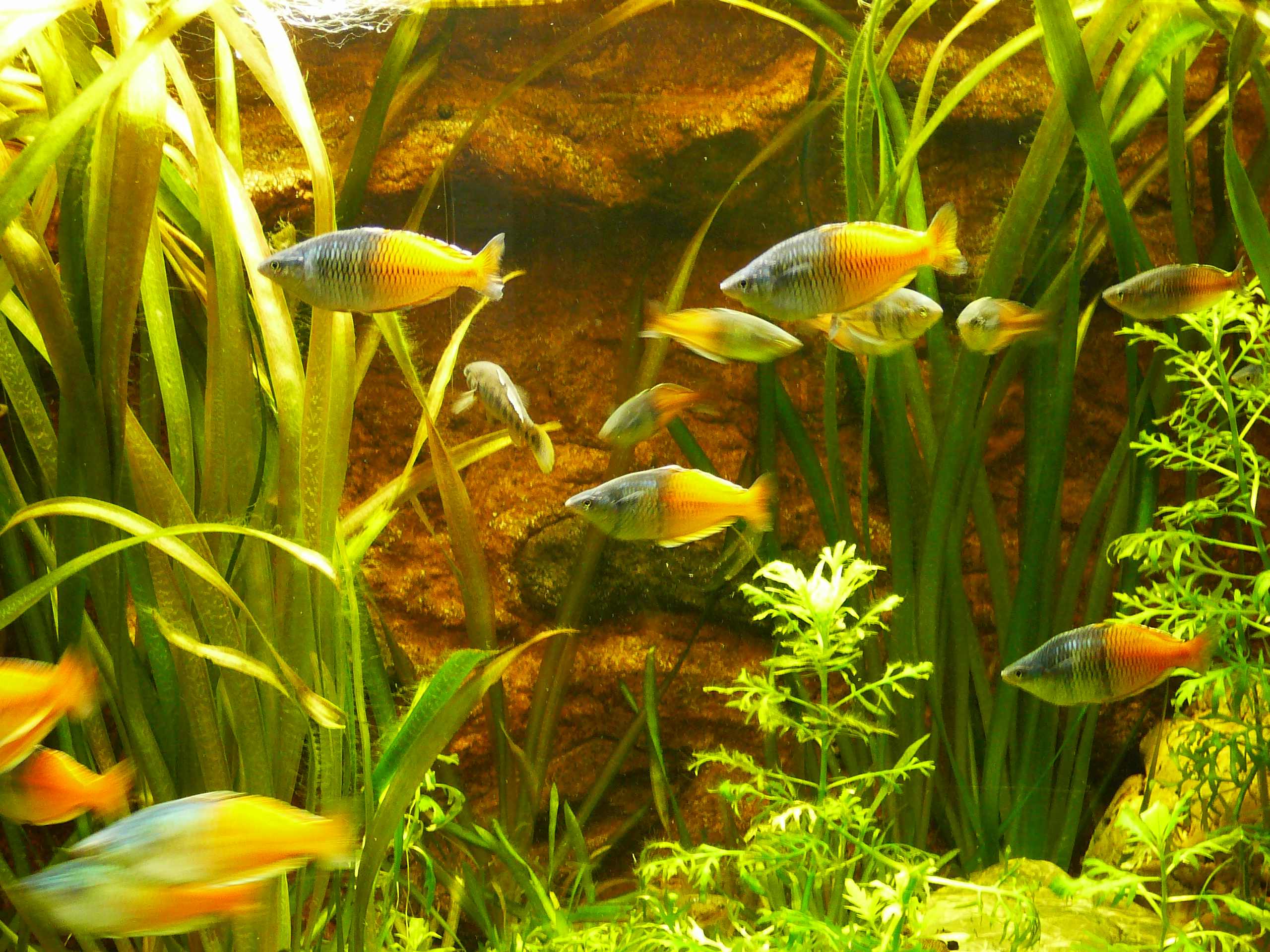
Native exclusively to the shallow, clear, limestone-buffered waters of Lake Ajamaru in West Papua, Indonesia, the *Boesemani Rainbowfish* (*Melanotaenia boesemani*) is celebrated for its breathtaking two-tone color gradient – displaying a deep metallic purplish-blue anterior head that transitions abruptly into a brilliant blazing sunset-orange posterior flank. In home aquariums, mature Boesemani provide non-stop schooling motion, peaceful community behavior, and mesmerizing morning mating displays.
Ichthyological field research published by the Australia New Guinea Fishes Association (ANGFA) confirms that Boesemani Rainbowfish require hard, alkaline water ($pH$ 7.5 – 8.2) and high dissolved oxygen to reach their full 4.5-inch adult potential.
Husbandry Keys for Radiant Boesemani Coloration
- 1. Sex Ratio Management: Maintain a ratio of 1 male to 2 females in a school of at least 6 to 8 individuals. Male competition for female attention triggers intense flashing of vibrant neon-orange nuptial stripes.
- 2. Astaxanthin & Carotenoid Nutrition: Feed high-grade freeze-dried cyclops, spirulina-enriched brine shrimp, krill flakes, and live daphnia to fuel natural red and orange pigment synthesis.
- 3. Strong Water Flow and Oxygenation: Utilize powerheads or wavemakers to generate invigorating river currents that stimulate active swimming and muscle development.
Boesemani Rainbowfish Optimum Tank Parameters
| Parameter Category | Recommended Value | Biological Rationale |
|---|---|---|
| Minimum Tank Size | 55 Gallons (4-Foot Length) | Boesemani are active open-water sprint swimmers |
| pH & Hardness | pH 7.4 – 8.2 | 10 – 18 dGH | Replicates limestone karst mineral bedrock of Lake Ajamaru |
| Temperature | 76°F – 82°F (24°C – 28°C) | Tropical metabolic equilibrium |
Frequently Asked Questions (FAQ)
Why are juvenile pet store Boesemani dull and silvery?
Rainbowfish are late bloomers that only develop their signature vivid blue and orange colors upon reaching sexual maturity at 12 to 18 months of age.
Are Boesemani Rainbowfish safe with dwarf shrimp?
Adult Boesemani have wide mouths and will readily eat baby shrimp, though adult Amano shrimp can co-exist safely in densely planted layouts.
Strategic Conclusion and Key Takeaways
Boesemani Rainbowfish are among the most dynamic, colorful additions to large planted community aquariums. Providing alkaline water, generous swimming length, and carotenoid nutrition rewards keepers with dazzling daily color displays.
Advanced Water Chemistry Dynamics and Osmoregulatory Physiology
Maintaining biological and chemical equilibrium in closed aquatic biotopes demands an in-depth understanding of cellular osmoregulation, nitrogen compound transformation, and microbial biofilm mechanics. In wild tropical river systems, immense water volumes continually dilute metabolic byproducts and replenish vital mineral ions. In the home aquarium, however, the keeper is entirely responsible for sustaining this delicate biochemical balance.
According to limnological research published by the University of Florida Fisheries and Aquatic Sciences and guidelines from the Aquatic Gardeners Association, sudden osmotic fluctuations induce severe stress on freshwater organisms. Fish and dwarf invertebrates expend significant metabolic energy actively pumping ions across gill membranes to maintain cellular homeostasis. When general hardness ($GH$), carbonate buffering ($KH$), or total dissolved solids ($TDS$) swing rapidly, this osmoregulatory capacity collapses, leading to chronic stress, suppressed immune function, and vulnerability to opportunistic pathogens.
The Biochemical Mechanics of Aerobic Nitrification and Gas Exchange
Within the filtration matrix, billions of specialized autotrophic chemolithotrophs – principally *Nitrosomonas* and *Nitrospira* – colonize porous sintered glass and ceramic substrates. These microorganisms convert toxic unionized ammonia ($NH_3$) into nitrite ($NO_2^-$), and subsequently into relatively benign nitrate ($NO_3^-$). This biological process consumes dissolved oxygen and carbonate hardness, releasing hydrogen ions ($H^+$) that naturally acidify the water column over time.
Aquarists must actively counteract this acidification by ensuring adequate water-column circulation, surface gas agitation, and consistent remineralization routines. Without sufficient carbonate buffering, the continuous acid production exhausts available reserves, precipitating catastrophic pH crashes that stall bio-filtration and endanger aquatic livestock.
Standard Operating Procedures: Maintenance, Nutrition, and Ecological Stability
Sustaining long-term vitality across high-tech planted aquascapes, specialized breeding colonies, and delicate softwater community setups requires strict adherence to standardized husbandry protocols. Routine maintenance should not be viewed as reactive chore work, but rather as preventative ecological stewardship that preserves the system’s baseline stability.
Weekly Preventative Maintenance Checklist
- 1. Debris Extraction and Mechanical Pre-Filter Rinsing: Gently rinse mechanical filter foams and replace polishing floss in discarded aquarium water to prevent trapped particulate waste from decomposing into dissolved organic carbon (DOC).
- 2. Parameter Verification: Test key parameters using calibrated liquid reagent kits (or digital probes for pH and TDS). Ensure that total ammonia and nitrites remain at absolute zero ($0.0$ ppm) and nitrates do not exceed target biotope thresholds.
- 3. Temperature and Flow Calibration: Inspect submersible heaters, electronic temperature controllers, and filter outflow nozzles to confirm optimal circulation and prevent localized thermal stratification or stagnant dead spots.
- 4. Tailored Micro and Macronutrient Supplementation: Adjust liquid fertilizer dosages based on plant growth density, light intensity, and CO2 saturation levels to prevent both nutrient depletion and opportunistic algae outbreaks.
Nutritional diversity is equally paramount for ornamental livestock. Combining high-protein live and frozen foods (such as freshly hatched baby brine shrimp, daphnia, and bloodworms) with carotenoid-rich spirulina flakes and sinking insect-meal granules ensures complete dietary amino acid profiles, enhanced disease resistance, and vibrant natural coloration.
Troubleshooting Common Husbandry Pitfalls and Biosecurity Safeguards
Even seasoned aquarists occasionally encounter environmental imbalances, sudden water clarity issues, or pathogen introductions. Establishing robust biosecurity safeguards and knowing how to diagnose root causes systematically prevents localized anomalies from cascading into total tank failure.
Diagnostic Analysis of Common Aquarium Challenges
When biological imbalances arise, aquarists should evaluate system parameters against the following diagnostic framework:
- Cloudy or Milky Water (Bacterial Bloom): Typically caused by a rapid increase in heterotrophic bacteria feeding on excess dissolved organic waste or a freshly cycling filter. Avoid massive water changes, as this continually feeds new micronutrients to the bloom; instead, run high aeration, reduce feeding, and allow nitrifying colonies to reach equilibrium over 3 to 5 days.
- Persistent Algae Outbreaks: Green dust algae, hair algae, and diatoms are symptoms of an imbalance between light intensity, photoperiod duration, carbon availability, and nutrient uptake. Reducing lighting duration to 7 hours, stabilizing CO2 injection, and increasing fast-growing stem plant biomass naturally outcompetes algal spores.
- Lethargy and Clamped Fins: Often the first behavioral indicator of osmotic shock, temperature fluctuations, or undetectable chemical contaminants (such as household aerosols or residual tap water chloramines). Perform an immediate 30% water change with properly conditioned, temperature-matched water and inspect all filtration components.
By pairing systematic troubleshooting with strict quarantine protocols for all new livestock and plants, aquarists create resilient, flourishing aquatic ecosystems that provide endless beauty and scientific fascination for years to come.
Advanced Water Chemistry Dynamics and Osmoregulatory Physiology
Maintaining biological and chemical equilibrium in closed aquatic biotopes demands an in-depth understanding of cellular osmoregulation, nitrogen compound transformation, and microbial biofilm mechanics. In wild tropical river systems, immense water volumes continually dilute metabolic byproducts and replenish vital mineral ions. In the home aquarium, however, the keeper is entirely responsible for sustaining this delicate biochemical balance.
According to limnological research published by the University of Florida Fisheries and Aquatic Sciences and guidelines from the Aquatic Gardeners Association, sudden osmotic fluctuations induce severe stress on freshwater organisms. Fish and dwarf invertebrates expend significant metabolic energy actively pumping ions across gill membranes to maintain cellular homeostasis. When general hardness ($GH$), carbonate buffering ($KH$), or total dissolved solids ($TDS$) swing rapidly, this osmoregulatory capacity collapses, leading to chronic stress, suppressed immune function, and vulnerability to opportunistic pathogens.
The Biochemical Mechanics of Aerobic Nitrification and Gas Exchange
Within the filtration matrix, billions of specialized autotrophic chemolithotrophs – principally *Nitrosomonas* and *Nitrospira* – colonize porous sintered glass and ceramic substrates. These microorganisms convert toxic unionized ammonia ($NH_3$) into nitrite ($NO_2^-$), and subsequently into relatively benign nitrate ($NO_3^-$). This biological process consumes dissolved oxygen and carbonate hardness, releasing hydrogen ions ($H^+$) that naturally acidify the water column over time.
Aquarists must actively counteract this acidification by ensuring adequate water-column circulation, surface gas agitation, and consistent remineralization routines. Without sufficient carbonate buffering, the continuous acid production exhausts available reserves, precipitating catastrophic pH crashes that stall bio-filtration and endanger aquatic livestock.
Standard Operating Procedures: Maintenance, Nutrition, and Ecological Stability
Sustaining long-term vitality across high-tech planted aquascapes, specialized breeding colonies, and delicate softwater community setups requires strict adherence to standardized husbandry protocols. Routine maintenance should not be viewed as reactive chore work, but rather as preventative ecological stewardship that preserves the system’s baseline stability.
Weekly Preventative Maintenance Checklist
- 1. Debris Extraction and Mechanical Pre-Filter Rinsing: Gently rinse mechanical filter foams and replace polishing floss in discarded aquarium water to prevent trapped particulate waste from decomposing into dissolved organic carbon (DOC).
- 2. Parameter Verification: Test key parameters using calibrated liquid reagent kits (or digital probes for pH and TDS). Ensure that total ammonia and nitrites remain at absolute zero ($0.0$ ppm) and nitrates do not exceed target biotope thresholds.
- 3. Temperature and Flow Calibration: Inspect submersible heaters, electronic temperature controllers, and filter outflow nozzles to confirm optimal circulation and prevent localized thermal stratification or stagnant dead spots.
- 4. Tailored Micro and Macronutrient Supplementation: Adjust liquid fertilizer dosages based on plant growth density, light intensity, and CO2 saturation levels to prevent both nutrient depletion and opportunistic algae outbreaks.
Nutritional diversity is equally paramount for ornamental livestock. Combining high-protein live and frozen foods (such as freshly hatched baby brine shrimp, daphnia, and bloodworms) with carotenoid-rich spirulina flakes and sinking insect-meal granules ensures complete dietary amino acid profiles, enhanced disease resistance, and vibrant natural coloration.
Advanced Biogeochemical Auditing and System Engineering for Boesemani Rainbowfish (Melanotaenia boesemani) Care
In professional aquaculture and long-term home aquascaping, achieving multi-year stability with Boesemani Rainbowfish (Melanotaenia boesemani) Care requires looking beyond surface-level aesthetics to examine the underlying biochemical kinetics of closed freshwater environments. According to research compiled by FAO Fisheries and Freshwater Aquaculture Division and global husbandry datasets from the NCBI PubMed Central Aquatic Veterinary Literature, over eighty percent of premature livestock losses and chronic algae blooms in captive systems trace back to three interrelated stressors: unmonitored diurnal pH swings, dissolved organic carbon (DOC) accumulation in neglected substrate zones, and insufficient nitrifying biofilm surface area relative to metabolic bioload.
1. Osmotic Gradient Control and Ionic Balance in Fish Species Library
Freshwater teleosts and invertebrates maintain internal body fluid osmolarity significantly higher than the surrounding water column, meaning water constantly diffuses inward across semi-permeable gill lamellae while vital sodium, chloride, and calcium ions diffuse outward. When configuring a system for Boesemani Rainbowfish (Melanotaenia boesemani) Care, matching Total Dissolved Solids (TDS) and General Hardness (dGH) to the evolutionary collection biotope referenced in the FishBase Global Ichthyology Taxonomic Database minimizes the metabolic energy expended on active osmoregulation. Before introducing new specimens or executing large restorative water changes, review our companion technical guide on Goldfish vs. Koi to ensure your drip-acclimation rate prevents osmotic shock.
2. Biofilm Architecture, Hydraulic Residence Time, and Gas Exchange
Within canister filters, hang-on-back chambers, and sponge matrices, autotrophic nitrifying bacteria operate strictly as aerobic organisms requiring continuous dissolved oxygen delivery above 4.0 mg/L at the biofilm boundary layer. Studies indexed in Integrated Taxonomic Information System (ITIS) demonstrate that when mechanical pre-filters clog with decaying plant matter and uneaten proteins, heterotrophic bacteria rapidly multiply and outcompete Nitrosomonas and Nitrospira guilds for oxygen and attachment space. To prevent biofilter channeling and nocturnal hypoxia in setups dedicated to Boesemani Rainbowfish (Melanotaenia boesemani) Care, pair high-porosity sintered glass media with regular mechanical sponge maintenance, and cross-reference our engineering analysis on Otocinclus Catfish Care and Acclimation and Angelfish Care Guide for Home Aquariums.
3. Preventive Diagnostic Protocol for Boesemani Rainbowfish (Melanotaenia boesemani) Care
- Pre-Maintenance Baseline Titration: Record liquid reagent readings for pH, dKH, ammonia, nitrite, and nitrate every week before siphoning the substrate so you can calculate exact weekly nitrate accumulation rates for your specific bioload.
- Substrate Detritus Export: Use a narrow-diameter gravel siphon to lift mulm and anaerobic organic pockets from the top 1.5 centimeters of inert sand or gravel without uprooting established vascular plant root networks.
- Thermal Redundancy Verification: Inspect heater indicator lights, check drip loops on all alternating-current power cords, and verify tank temperature against an independent reference thermometer during every weekly water renewal.