


The Lesson I Learned the Hard Way
Want to tell you about a mistake I made early. I had a beautiful 20-gallon planted tank with twelve Neon Tetras and a Betta. One morning, I noticed one of the Tetras had a fuzzy white fungus on its mouth.
I panicked. I went to the store, bought a bottle of medicine, and poured it directly into my display tank. It was a disaster. The medicine was strong; it turned my water blue, it killed my expensive live plants, and it crashed my “Good Germs,” which made the water cloudy for weeks.
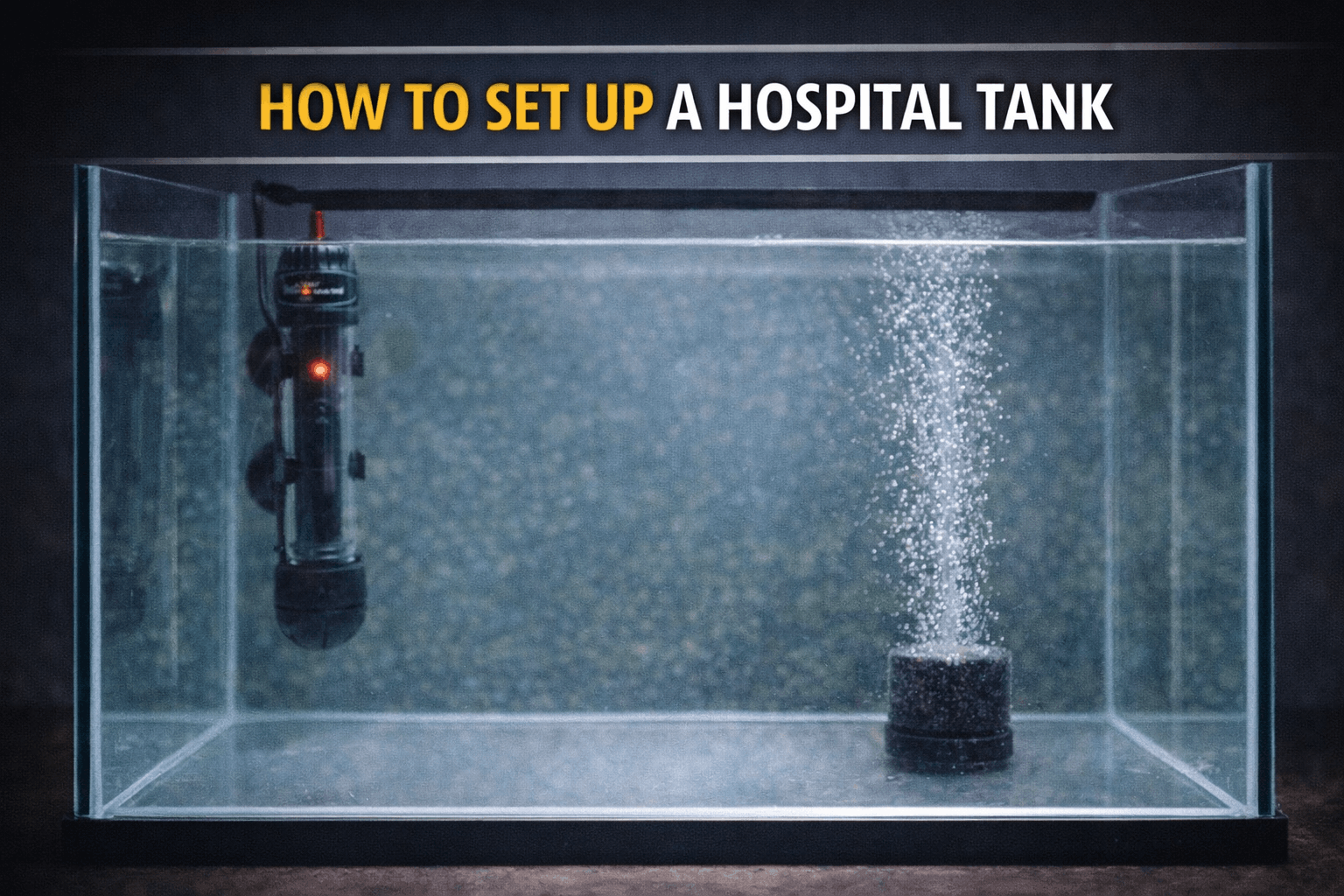
That was the day I realized I needed a “Hospital Tank.” Think of it as a private room in a hospital. It is a small, simple tank where a sick fish can get the medicine and rest they need without affecting the rest of the “family” in the main aquarium. In this 1,500-word guide, I am going to show you how to set one up for very little money and why it is the best investment you will ever make.
Phase 1: What is a Hospital Tank? (And Why You Need One)
A Hospital Tank (sometimes called a Quarantine Tank) is a separate, small aquarium used for two reasons:
-
To Heal: If a fish is sick or has been bullied, you move them here to give them medicine and a quiet place to recover.
-
To Protect: If you buy a new fish from the store, you keep them here for 2 weeks to make sure they aren’t bringing “hidden” diseases into your main tank.
Why I love this setup: Medicine is expensive! If you have a 55-gallon tank, you have to use a lot of medicine to treat the whole thing. But if you move the sick fish to a 5-gallon Hospital Tank, you only use a tiny bit of medicine. It saves you money and keeps your main tank’s ecosystem safe.
Step 2: The “Bare-Bones” Setup (Keep it Simple)
One of the biggest mistakes I see students make is trying to make their Hospital Tank look “pretty.” Don’t do this. A Hospital Tank should be “Bare-Bones.”
1. The Tank itself
I suggest a 5-gallon or 10-gallon glass tank. You can usually find these very cheap at garage sales or big-box stores. You don’t need a lid if you keep the water level an inch lower than the top.
2. No Gravel (The “Bare Bottom” Rule)
I never put gravel or sand in my Hospital Tank. Why? Many parasites (like Ich) live in the gravel. If there is no gravel, the parasites have nowhere to hide, and it is much easier for me to suck them up with a siphon. It also allows me to see exactly how much “poop” the fish is making, which tells me if they are getting better.
3. Simple Hiding Spots
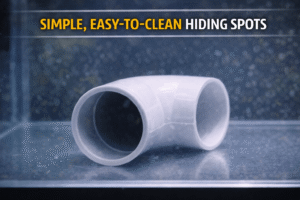
A sick fish is a scared fish. They need a place to hide so they don’t get stressed.
-
My Choice: I use a PVC Pipe or a clean ceramic coffee mug (with no soap residue!). These don’t soak up medicine and are very easy to clean after the fish is healed.
Step 3: The “Instant” Filter Secret
You might be thinking, “How do I keep the water clean if the tank isn’t cycled?” I have a professional trick that I use every time.
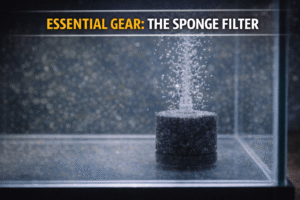
The “Sponge Filter” Strategy: I always keep a small Sponge Filter running in the corner of my main healthy tank. It sits there for months, doing nothing but collecting “Good Germs.”
-
The Magic Moment: When a fish gets sick, I set up the Hospital Tank, fill it with water from the main tank, and move that “dirty” sponge filter into the Hospital Tank.
-
Result: Instant Cycle! The Hospital Tank is immediately safe for the fish because the germs are already alive and ready to work.
A Word on Aeration: Medicines often make it harder for fish to breathe. I always make sure my air pump is running on high in the Hospital Tank to create lots of bubbles.
Step 4: Maintenance in the “Sick Room”
When a fish is in the Hospital Tank, you have to be extra careful with the water. Because it is a small tank, the waste builds up fast.
Routine: Do a 20% water change every day in Hospital Tank.
-
The Secret: I take the “new” water from my healthy main tank. This ensures the water chemistry is exactly what the fish is used to, which reduces stress.
-
Important: If you are using medicine, remember that when you take water out, you are taking medicine out too. You must “top up” the medicine according to the bottle’s instructions after the water change.
Phase 5: Common Medicines to Keep on Hand
I suggest every hobbyist keeps a small “Medicine Cabinet” so you are ready for an emergency at 10:00 PM when the stores are closed. Here is what I keep:
-
Aquarium Salt: The “Aspirin” of the fish world. It helps with stress and minor infections.
-
Seachem Prime: To keep the water safe from Ammonia.
-
General Cure (API): A great “all-in-one” medicine for parasites and worms.
-
Erythromycin: An antibiotic for “Fin Rot” or “Pop-eye.”
The Mentor’s Warning: Never mix medicines unless the bottle says it is safe. Mixing chemicals can create a “toxic soup” that is more dangerous than the disease itself.
The Rescue of “Finny”
I had a fancy Goldfish named Finny who got a bad case of “Red Pest” (a bacterial infection). He was sitting at the bottom and wouldn’t move. Instead of treating my big 50-gallon tank, I moved him to a 5-gallon bucket with a heater and a sponge filter.
What happened: Because the tank was small, I could watch him closely. I could see that he wasn’t eating his pellets, so I switched to soaked flakes. I did a 50% water change every day for a week. Within 10 days, the red streaks on his fins were gone, and he was wiggling for food again. If I had left him in the big tank, the other fish might have bullied him, and he wouldn’t have recovered so fast. A Hospital Tank is about giving a fish the “peace and quiet” to heal.
3 Tips for a Stress-Free Recovery
-
Keep the Lights Off: I usually leave the lights off on the Hospital Tank for the first two days. Darkness makes the fish feel like they are hiding, which lowers their heart rate and helps them heal.
-
Temperature Stability: Make sure your Hospital Tank has its own heater. Most infections heal faster if the water is a steady 78°F to 80°F.
-
The “Net” Rule: Never use the same net for your Hospital Tank and your healthy tank. If you do, you might accidentally “teleport” the germs back into your beautiful display tank!
Phase 6: Bringing the Fish Back Home
Once the spots are gone or the fins look healthy again, you might want to drop the fish back into the main tank right away. Wait! I always wait 3 extra days after the fish looks “perfect.” I want to be 100% sure the infection is gone.
-
The Transition: Before I move the fish back, I do a small water change in the Hospital Tank using water from the main tank. This “acclimatizes” the fish so they don’t get shocked by the move back home.
Conclusion: Your Goal is Prevention
At the end of the day, I hope you never have to use your Hospital Tank. But having one ready to go in your closet or under your stand is what separates a beginner from a professional. It shows that you respect your fish and that you are prepared for the “rainy days” of the hobby.
A Hospital Tank isn’t just a place for sick fish; it is your “Insurance Policy.” It keeps your plants safe, keeps your money in your pocket, and gives your fish the best chance at a long, healthy life.
If you have a fish that looks “a little bit off” today, don’t wait. Set up your simple Hospital Tank, move them over, and give them the care they deserve. If you aren’t sure what medicine to use, leave a comment below! I am here to help you figure out the symptoms and find the right cure.