
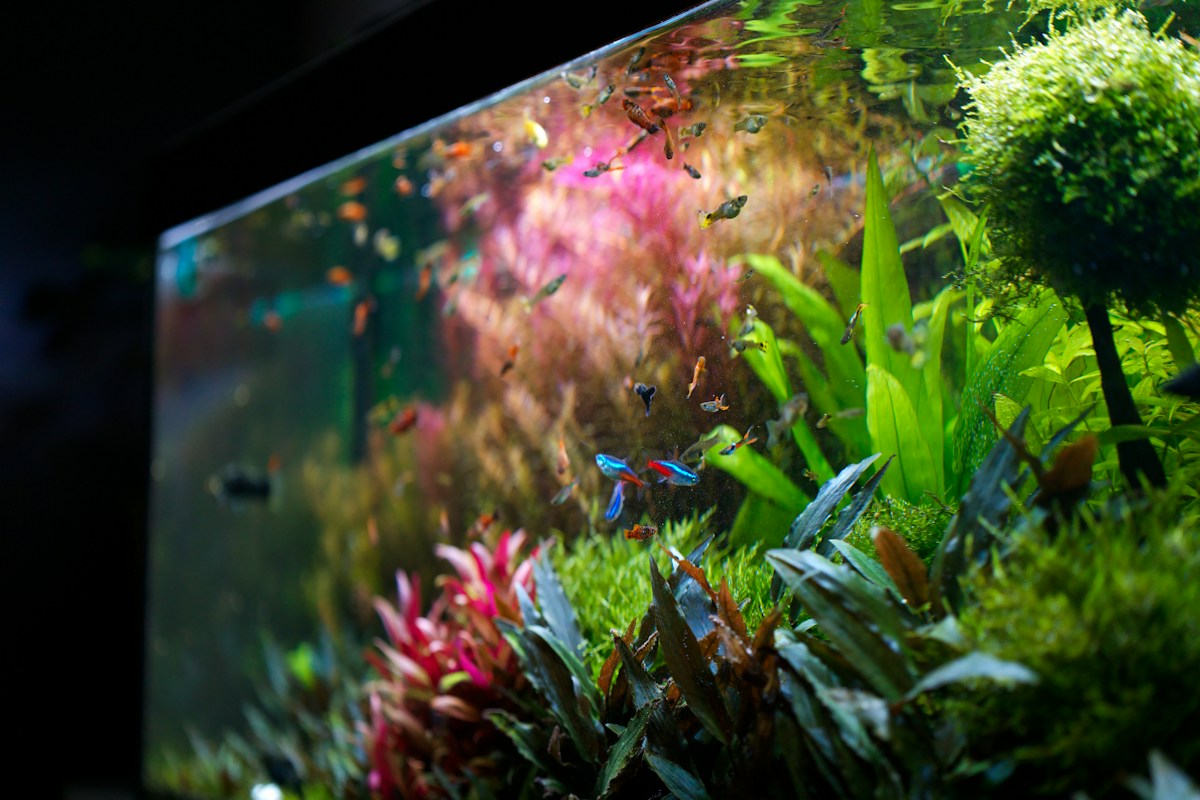
In an era where high-tech aquascaping is dominated by pressurized carbon dioxide injection cylinders, high-output full-spectrum LED fixtures, precision dosing pumps, and motorized multi-stage canister filters, the Walstad Method stands as a profound, elegant antithesis. Codified by aquatic microbiologist Diana Walstad in her seminal work *Ecology of the Planted Aquarium*, this revolutionary approach champions the creation of a balanced, self-sustaining Natural Planted Tank (NPT) that thrives with minimal mechanical intervention.
At the core of the Walstad philosophy is a radical ecological premise: rather than treating an aquarium as a sterile vessel dependent on synthetic chemical inputs, the aquarist cultivates a closed, miniature wetland ecosystem. In a properly balanced Walstad tank, live aquatic macrophytes and benthic microorganisms fulfill all vital life-support functions, extracting nutrients directly from natural organic potting soil, purifying water without motorized filters, and recycling carbon dioxide through organic decomposition.
Yet, the simplicity of the Walstad Method is deceptive. Operating a filterless, non-CO2 aquarium is not an excuse for neglect; it requires a rigorous understanding of soil mineralogy, organic carbon breakdown kinetics, anaerobic soil chemistry, and plant-microbe symbiosis. Novice hobbyists who utilize inappropriate soils or skimp on vegetative biomass invariably trigger catastrophic ammonia spikes and dense cyanobacterial mats.
This masterclass guide breaks down the geochemical foundation of potting soil selection, mineralized capping techniques, natural CO2 production, and the biological balance required to build a flourishing, maintenance-free aquatic ecosystem.
The Geological Engine: Organic Potting Soil Chemistry
The foundational bedrock of the Walstad Method is a 1.0-inch layer of unsterilized, organic terrestrial potting soil resting beneath an inert gravel cap. While commercial active aquasoils are kiln-fired and stripped of organic activity, natural potting soil is a rich biological matrix teeming with organic humus, clay minerals, and living heterotrophic microorganisms.
Soil selection is critical: the aquarist must choose an organic, chemical-free potting soil or mineralized topsoil containing zero synthetic chemical fertilizers, wetting agents, perlite, or manure. High concentrations of artificial fertilizers will dump massive ammonia surges into the water column, poisoning livestock and triggering explosive algae blooms.
In the submerged substrate bed, natural potting soil provides an inexhaustible reservoir of macronutrients (nitrogen, phosphorus, potassium) and critical micronutrients (iron, manganese, zinc) bound securely to organic humus and clay particles. As roots penetrate the soil, plants access these nutrients directly at the root zone via active proton exchange, denying nourishment to free-floating algae in the water column.
The Natural Carbon Dioxide Cycle: Substrate Decomposition
In high-tech planted aquascapes, carbon dioxide must be injected artificially via gas cylinders. In a Walstad aquarium, continuous CO2 is generated naturally through substrate respiration.
Submerged soil is packed with beneficial heterotrophic bacteria that metabolize the organic carbon within the humus. Through natural decomposition, these soil microbes release a steady, continuous stream of dissolved carbon dioxide ($) and humic acids directly into the rhizosphere and overlying water column.
Research published by the Aquatic Gardeners Association demonstrates that substrate microbial respiration generates between 5 and 10 ppm of dissolved CO2 continuously, day and night. While lower than high-tech 30 ppm injection, this steady baseline – combined with metabolic respiration from fish and nighttime plant respiration – is more than sufficient to fuel the robust growth of low-tech aquatic flora.
The Sand or Gravel Cap: The Essential Barrier
Natural potting soil must never come into direct contact with the open water column. Raw soil exposed to water creates a muddy, turbid mess that suffocates fish and leaches excessive nutrients.
The soil must be sealed beneath a precise 0.75 to 1.0-inch cap of inert sand or fine aquarium gravel (grain size 1.0 to 2.0 mm). Sand or gravel that is too fine (under 0.5 mm) forms an impenetrable, cement-like barrier that restricts root growth and prevents beneficial gas exchange. Conversely, gravel that is too coarse (over 4.0 mm) possesses gaps that allow soil particles to escape into the water column.
The cap functions as a semi-permeable membrane: it keeps soil anchored firmly on the bottom while permitting plant roots to penetrate downward and allowing dissolved CO2 and humic acids to diffuse gently upward.
Heavy Vegetative Biomass: The 80% Rule
The single greatest cause of failure in newly established Walstad aquariums is insufficient plant mass. A Walstad tank cannot be started with three small stem cuttings; it must be densely packed with live plants on Day One.
At least 70 to 80 percent of the substrate surface area must be covered in fast-growing, adaptable aquatic vegetation. Fast-growing stem plants (*Hygrophila polysperma*, *Ludwigia repens*, *Bacopa monnieri*), heavy root feeders (*Cryptocoryne wendtii*, *Echinodorus*), and floating plants (*Salvinia*, Frogbit) are non-negotiable.
Floating plants play an indispensable dual role: having direct access to atmospheric carbon dioxide, their metabolism operates at peak efficiency, allowing their trailing submerged root curtains to aggressively strip ammonia, nitrite, and heavy metals from the water column, outcompeting algae and purifying the water for fish without mechanical filters.
Operating a successful Walstad natural aquarium requires adhering to strict ecological parameters. Review the Natural Planted Tank (NPT) operational matrix below.
Walstad Method Natural Planted Tank Architecture Matrix
| Ecosystem Component | Walstad Specification | Ecological Function | Critical Pitfalls to Avoid |
|---|---|---|---|
| Base Substrate | 1.0 inch Organic Potting Soil | Nutrient reservoir; microbial CO2 generation | Commercial soil with synthetic fertilizers/perlite |
| Substrate Cap | 0.75 – 1.0 inch Inert Gravel (1-2mm) | Prevents soil clouding; permits root penetration | Excessively deep cap causes anaerobic compaction |
| Initial Plant Density | 70% – 80% Substrate Coverage | Immediate biological nutrient uptake; algae denial | Sparse planting leads to catastrophic algae blooms |
| Filtration / Flow | Small powerhead or none (Filterless) | Plants act as biological filter; gentle circulation | Excessive surface agitation strips natural CO2 |
| Water Change Routine | Infrequent (Every 3-6 months) | Conserves internal ecosystem mineral balance | Heavy weekly water changes destabilize balance |
Following this ecological framework ensures a self-sustaining low-tech paradise. Review the essential care inquiries below.
Frequently Asked Questions About the Walstad Method
Can a Walstad aquarium really run without a filter?
Yes. In a heavily planted Walstad tank, live aquatic plants and millions of beneficial bacteria living on leaf surfaces and in the soil consume ammonia and toxins directly, fulfilling all biological filtration functions naturally.
What type of potting soil should you use?
Use plain, organic potting soil or organic topsoil with zero added chemical fertilizers, pesticides, or moisture-retention beads. Look for soil sifted to remove large wood chunks and perlite.
Why do you need floating plants in a Walstad tank?
Floating plants have unlimited access to atmospheric CO2, allowing them to grow at maximum speed and aggressively suck excess nitrogen, phosphorus, and heavy metals out of the water, preventing algae.
Do you need to inject CO2 or add liquid fertilizers?
No. The decomposing organic matter in the soil continuously produces carbon dioxide, while the soil itself supplies all essential plant fertilizers. Adding CO2 or fertilizers upsets the low-tech balance.
How thick should the soil and gravel layers be?
Maintain strictly 1 inch of potting soil covered by 0.75 to 1 inch of fine gravel or coarse sand. Making the soil layer thicker than 1.5 inches risks creating severe toxic anaerobic conditions.
Can you gravel vacuum a Walstad aquarium?
No, you should never deep-vacuum a Walstad substrate. Vacuuming will pull the messy potting soil up through the gravel cap into the water column. Only gently siphon loose detritus off the top surface.
What lighting schedule is recommended for a Walstad tank?
Diana Walstad recommends a ‘Siesta’ lighting schedule: 4 to 5 hours on in the morning, followed by a 2 to 4 hour dark midday break, and another 4 hours on in the evening. This allows natural CO2 to regenerate midday.
Is the Walstad Method safe for shrimp and snails?
Yes, Neocaridina shrimp and snails thrive in Walstad tanks because the abundant natural micro-fauna, decomposing leaf litter, and biofilm provide a continuous, natural buffet.
What fish species do best in a Walstad aquarium?
Small, peaceful community species with low bioloads are best: Ember Tetras, Chili Rasboras, Endlers, Guppies, Honey Gouramis, and small Corydoras catfish.
Strategic Conclusion and Ecological Elegance
The Walstad Method is an inspiring reminder that nature complex biological systems often surpass human mechanical engineering. By establishing a living partnership between terrestrial soil chemistry, microbial decomposition, and dense aquatic vegetation, the aquarist crafts a resilient, self-cleansing aquatic ecosystem. The Natural Planted Tank liberates hobbyists from noisy equipment and endless dosing charts, proving that true mastery lies in working with nature, not against it.
For deeper study into wetland biogeochemistry and aquatic botany, explore academic research at the University of Florida Center for Aquatic Plants, publications from the Aquatic Gardeners Association, and limnological indices compiled by the Food and Agriculture Organization.