


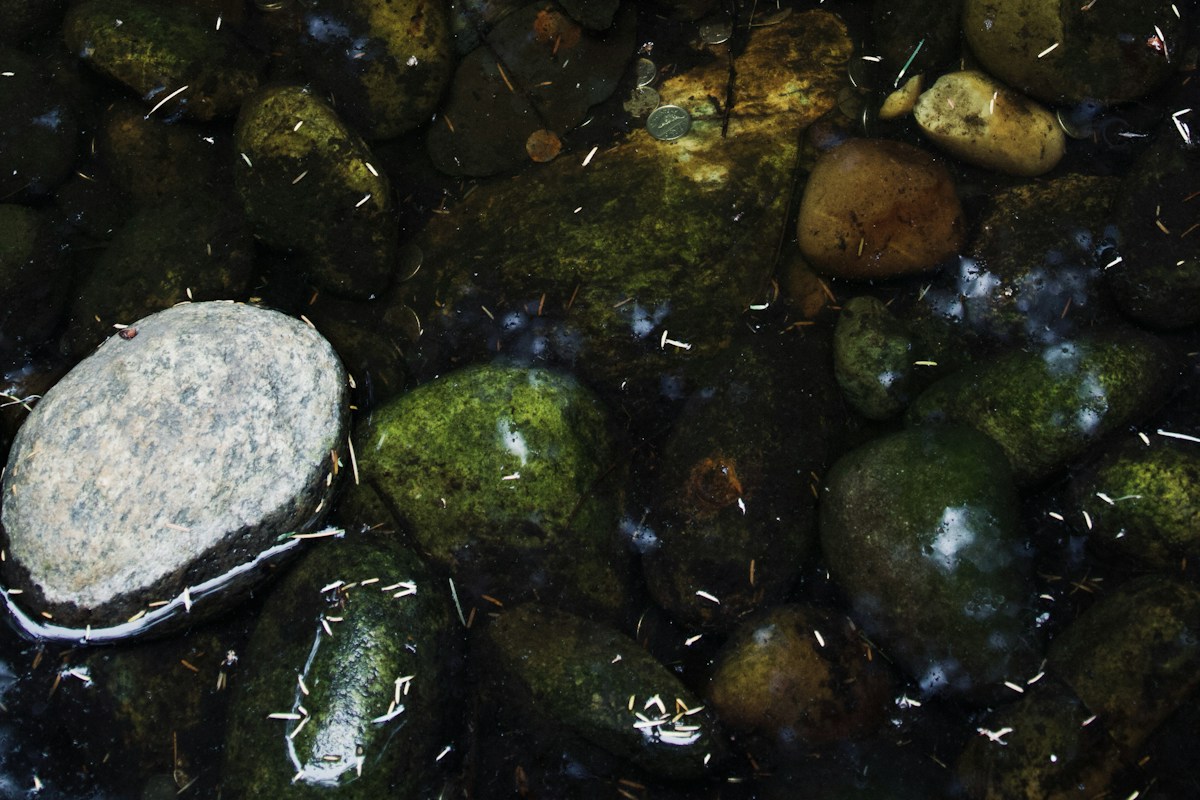
Stones form the immutable, geological backbone of modern freshwater aquascaping. Whether anchoring the dramatic crags of an Iwagumi mountain range, framing a sweeping Dutch layout, or retaining terraced substrate slopes in a Nature Aquarium, decorative rockwork establishes weight, permanence, and ancient drama within the glass vessel. Yet, all too often, aquarists select stones based purely on external visual aesthetics without understanding the hidden geochemical reactions that occur once mineral surfaces are submerged.
Every stone introduced into an aquarium is a potential chemical reactor. Depending on mineralogical composition, certain rocks remain completely inert, while others actively dissolve under acidic conditions, leaching massive quantities of calcium carbonate ($), magnesium, and trace metals into the water column. In a high-tech planted tank utilizing pressurized carbon dioxide, this chemical dissolution accelerates exponentially.
For sensitive softwater aquatic livestock – such as Crystal Red Caridina shrimp, Discus, and delicate South American tetras – the sudden, uncontrolled escalation of General Hardness (GH), Carbonate Hardness (KH), and Total Dissolved Solids (TDS) triggered by inappropriate stone selection can induce fatal osmotic shock and organ failure.
Mastering stone selection requires an intimate knowledge of sedimentary, metamorphic, and igneous petrology, acid-testing diagnostic procedures, and water chemistry mitigation strategies to ensure both aesthetic brilliance and hydrological safety.
Sedimentary vs Igneous Geology: The Mineral Dissolution Mechanism
Aquarium stones classify petrologically into three broad geological categories: sedimentary, metamorphic, and igneous. The degree to which a rock alters water chemistry depends directly on its primary cementing matrix.
Sedimentary stones formed in ancient marine basins – most notably Seiryu Stone, Frodo Stone, and Manten Stone – are composed of compressed limestone, dolomite, and calcium carbonate cemented by calcite. When submerged in slightly acidic aquarium water (pH 6.0 to 6.8), especially under pressurized carbon dioxide injection, carbonic acid ($) continuously reacts with the calcium carbonate, dissolving it into free calcium ions (^{2+}$) and bicarbonate (^-$).
This geochemical reaction acts as a continuous buffering engine: Carbonate Hardness ($) steadily climbs from 0 up to 6 to 10 dKH, while General Hardness ($) can exceed 15 dGH. In a softwater Caridina shrimp tank where KH must remain strictly at 0 dKH to maintain active soil buffering, Seiryu stone will exhaust active soils and destroy the shrimp colony within months.
Conversely, igneous and high-grade metamorphic rocks – including Black Lava Rock, Basalt, and inert Slate – formed under intense volcanic heat and pressure. Their silicate matrices are virtually insoluble in water, rendering them completely chemically inert.
The Acetic and Muriatic Acid Test: Diagnostic Field Verification
Before placing any unknown or gathered stone into an aquarium, aquarists must perform a simple chemical reactivity test to determine its carbonate content.
Wash the stone thoroughly and apply several drops of concentrated acid (such as 10 percent hydrochloric/muriatic acid or pure white vinegar) directly onto a fresh scratch or unweathered surface. If the liquid begins to fizz, foam, or bubble with visible effervescence, the stone contains free calcium carbonate. The effervescence is carbon dioxide gas escaping as the acid dissolves the limestone: + 2H^+ \rightarrow Ca^{2+} + H_2O + CO_2\uparrow$.
Stones that fizz vigorously will significantly raise water hardness and pH. Stones that produce zero effervescence are chemically inert and will not alter water parameters.
Evaluating Popular Aquascaping Stones
Seiryu Stone (Ryuoh Stone): The king of Iwagumi aquascaping. Renowned for its jagged, weathered crags and striking white calcite veins. Highly reactive; raises GH, KH, and TDS significantly. Requires regular large weekly water changes using pure RO/DI water to reset mineral accumulation.
Dragon Stone (Ohko Stone): A unique sedimentary clay-mineral rock characterized by a cratered, honeycomb surface resembling dragon scales. Dragon Stone is completely chemically inert; it does not alter pH, GH, or KH. However, because it is hardened clay, it is fragile and contains deep pores packed with dry silt that require vigorous high-pressure washing before placement.
Black Lava Rock (Scoria): Volcanic igneous rock featuring extreme porosity, sharp angular ridges, and deep charcoal-black coloring. 100 percent chemically inert. Its porous vesicular matrix provides immense surface area for nitrifying bacteria and provides the ultimate anchoring substrate for aquatic mosses and epiphytic rhizomes.
Selecting hardscape stones requires balancing visual texture with water chemistry impact. Review the aquascaping stone petrology matrix below.
Aquascaping Stone Petrology and Water Chemistry Matrix
| Stone Variety | Geological Origin | Water Chemistry Effect | Acid Test Reaction | Ideal Biotope Application |
|---|---|---|---|---|
| Seiryu / Ryuoh Stone | Metamorphic Limestone | Strongly elevates GH, KH, and pH | Vigorous bubbling / effervescence | Iwagumi, Livebearers, African Cichlids |
| Dragon Stone (Ohko) | Fossilized Hardened Clay | 100% Completely Inert (No change) | Zero reaction | Caridina shrimp, softwater planted tanks |
| Black Lava Rock | Extrusive Igneous (Basaltic) | 100% Completely Inert (No change) | Zero reaction | Moss scapes, mountain ridges, base tiers |
| Frodo / Manten Stone | Weathered Metamorphic Siltstone | Slight to moderate GH/KH increase | Weak to moderate fizzing | Nature Aquariums, high-tech stem layouts |
| Natural Slate | Foliated Metamorphic Shale | 100% Completely Inert (No change) | Zero reaction | Substrate terrace dividers, cave shelters |
Evaluating stone chemistry safeguards livestock and ensures stable water parameters. Review the essential care inquiries below.
Frequently Asked Questions About Aquarium Hardscape Stones
How can you tell if a rock will raise aquarium pH?
Pour a few drops of white vinegar or dilute muriatic acid onto the stone. If it fizzes or bubbles, the stone contains calcium carbonate and will actively raise aquarium pH, GH, and KH.
Can Seiryu stone be used with Caridina crystal red shrimp?
It is strongly discouraged. Seiryu stone leaches calcium and carbonate ions, raising KH above 0. Caridina shrimp require zero KH and soft acidic water; high mineral leaching causes fatal molting failures.
Why does Dragon Stone need so much washing before use?
Dragon Stone is formed from natural hardened clay. Its deep honeycomb cavities are packed with dried mud, clay, and silt that will turn an aquarium into thick brown soup if not blasted with a hose first.
How do you mitigate the water-hardening effects of Seiryu stone?
Use active aquasoil to absorb released carbonates, perform 50 percent weekly water changes using pure RO/DI water, and avoid aggressive CO2 injection that dissolves limestone faster.
Is Black Lava Rock safe for bottom-dwelling fish?
Lava rock has sharp, jagged edges that can abrade the delicate sensory barbels of Corydoras catfish and Kuhli loaches. Cover lower lava rock tiers with sand or soften edges with thick moss.
Can you collect rocks from outside for your aquarium?
Yes, but you must acid-test them for carbonates, avoid rocks with visible metallic or rust veins (which leach toxic heavy metals like copper or iron), and scrub them thoroughly in boiling water.
What type of glue bonds heavy aquarium stones together?
Use aquarium-safe cyanoacrylate gel glue combined with small wads of cotton or cigarette filter media placed between stone contact points, or two-part epoxy putty designed for aquatic use.
Does boiling rocks make them explode?
Porous river rocks containing trapped internal water pockets can explode if heated rapidly in boiling water. Never bake rocks in an oven; soak them in hot water or scrub with hydrogen peroxide instead.
Which stones are 100% chemically inert?
Dragon Stone, Black Lava Rock, natural Slate, Basalt, and petrified wood are completely chemically inert and will never alter your water parameters.
Strategic Conclusion and Geological Wisdom
Stones bring timeless majesty to the aquarium, evoking ancient cliffs, rushing torrents, and peaceful mountain vistas. Yet, the true art of aquascaping lies in harmonizing geological grandeur with chemical reality. By selecting stones whose mineralogy supports – rather than sabotages – your livestock and plant species, you build an enduring aquatic masterpiece grounded in ecological balance.
For more geological and limnological resources, explore publications from the Aquatic Gardeners Association, aquatic soil and mineral research at the University of Florida IFAS Extension, and water chemistry standards from the Food and Agriculture Organization.