


Gouramis Care Guide for Healthy Tanks
Gouramis are colorful freshwater fish that can do well in peaceful community aquariums. They need warm water, steady conditions, and a tank with plants and cover. This gouramis care guide covers aquarium setup, daily fish care, feeding, tankmate fit, and fish health for honey gouramis, sparkling gouramis, dwarf gouramis, pearl gouramis, and other common freshwater fish.
What do gouramis need to thrive?
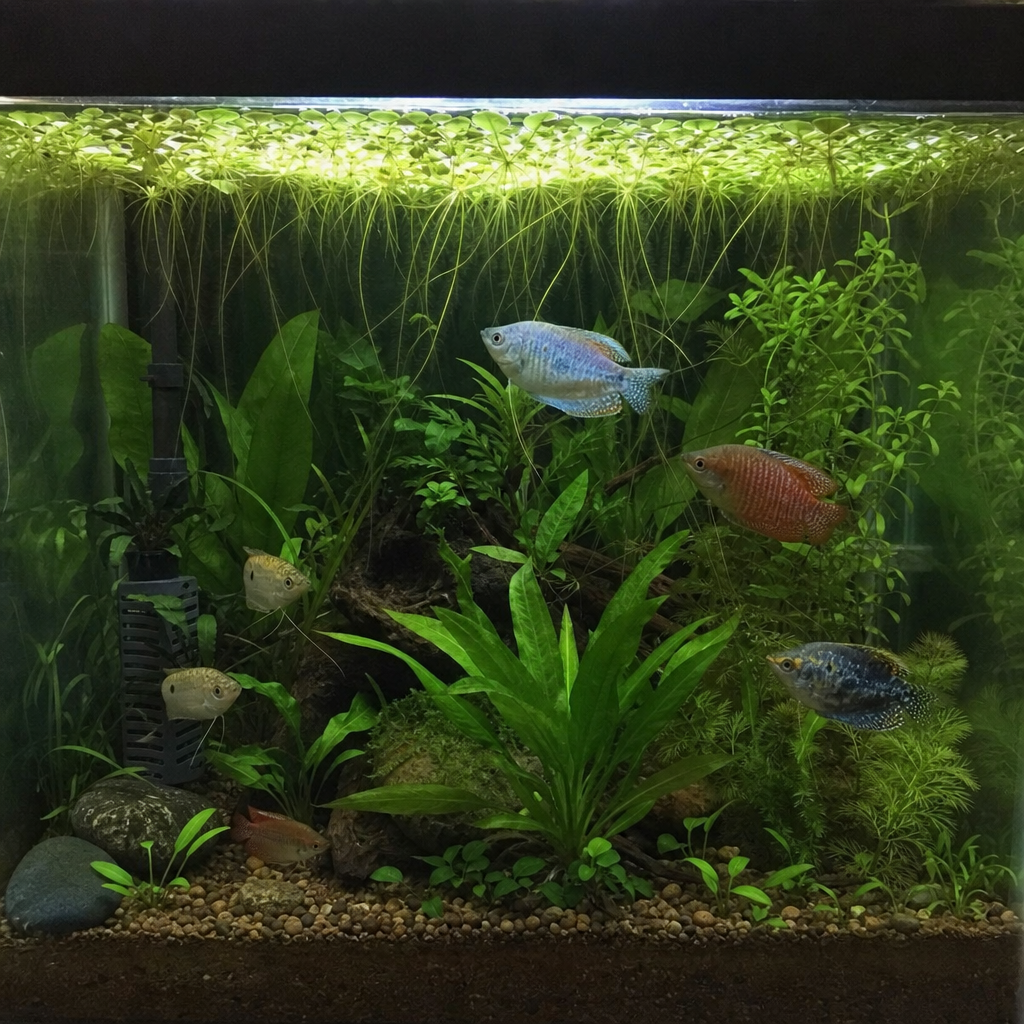
Gouramis need clean warm water, gentle filtration, open surface access, hiding places, and calm tankmates. They are labyrinth fish, which means they can breathe air at the water’s surface. Because of that, they always need room at the top of the tank. Strong surface flow or poor water quality can cause stress fast.
Most common gouramis do best in tropical freshwater tanks with stable water near 76–82°F, a cycled filter, and regular care. They also like plants, floating cover, driftwood, and shaded spots, since many species come from slow water with dense plant growth. A bare, bright, fast-flowing tank can make them shy, stressed, or aggressive.
Use this Gouramis Care Guide as a simple framework, then adjust it for the exact species you keep. A honey gourami is usually smaller and milder than many dwarf or three-spot types, while sparkling gourami care often centers on quiet water, small foods, and thick cover.
Aquarium setup for healthy gouramis
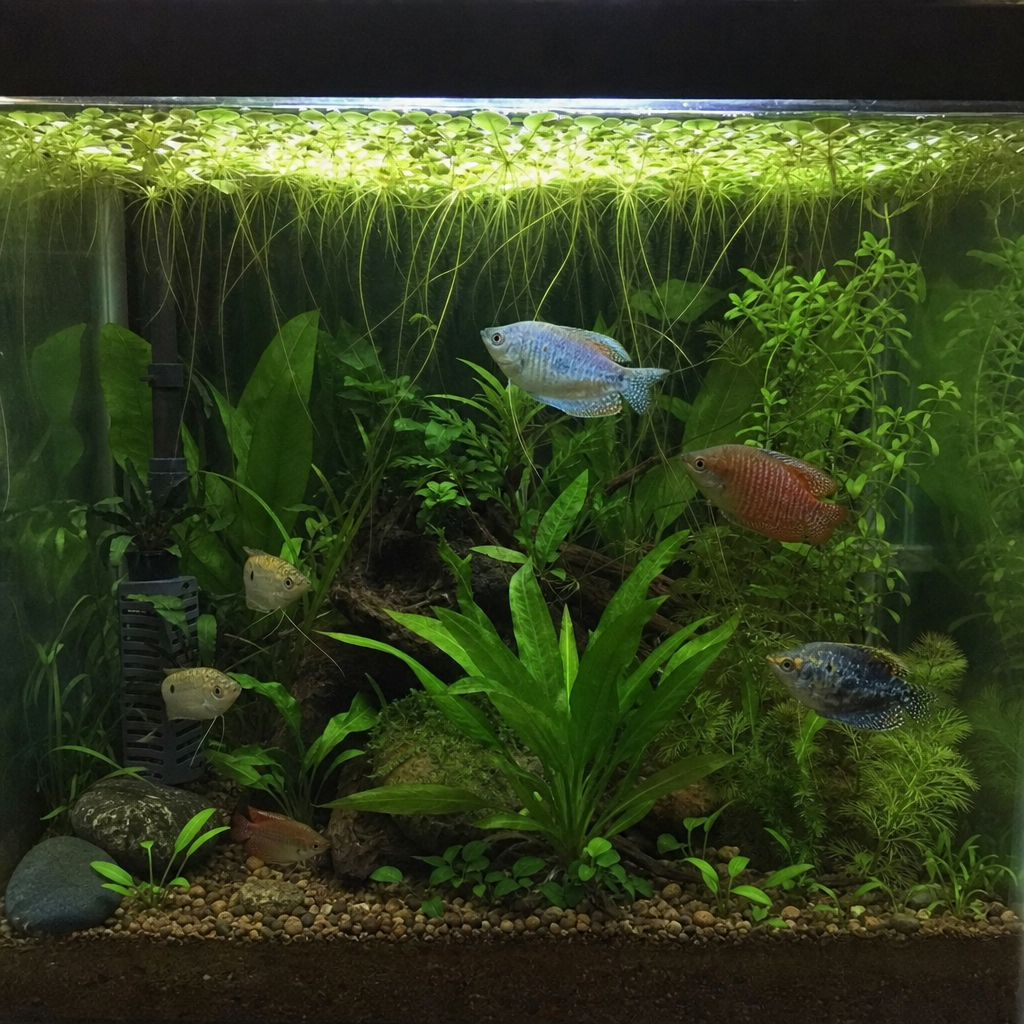
A strong aquarium setup starts before the fish come home. Gouramis can be hardy when conditions are right, but they do not do well in unstable, uncycled tanks. Cycling the aquarium first lets helpful bacteria process fish waste and lowers the risk of ammonia and nitrite spikes.
Choose a tank size that fits the species and your stocking plan. Smaller species such as sparkling gouramis and honey gouramis can do well in modest planted aquariums, while larger or more pushy gouramis need more swimming room and more visual breaks. When in doubt, give them extra space.
A gourami-friendly setup should include:
- Gentle filtration: Use a sponge filter, baffled hang-on-back filter, or another low-flow option that keeps water clean without pushing the fish around.
- Warm, stable temperature: Use a reliable heater and thermometer instead of room temperature alone.
- Live or silk plants: Plants add cover, cut stress, and break up territories.
- Floating cover: Frogbit, salvinia, and similar plants help gouramis feel safe, but leave open space at the surface.
- Soft hiding areas: Driftwood, leaf litter, caves, and tall plants give shy fish places to retreat.
- A secure lid: Gouramis can jump, especially when startled.
Avoid sharp decorations that can tear fins. Also, avoid placing gouramis in tanks that have not been tested and have just been filled. Clear water is not the same as safe water; ammonia and nitrite can be invisible and still dangerous.
Water quality and routine maintenance
Good fish health depends on steady care. Test water often, especially in new tanks, after adding fish, or whenever behavior changes. Ammonia and nitrite should stay at zero in an established aquarium, and nitrate should be controlled with water changes, plants, and careful feeding.
A simple routine works best. Change part of the water each week, or as needed based on test results. Clean algae without stripping the tank, and rinse filter media only in removed tank water so you do not kill helpful bacteria. Sudden deep cleaning can upset the aquarium and stress the fish.
Watch the water surface too. Because gouramis breathe air, they need open access to the top of the tank. A surface film, too many floating plants, or sealed gaps can reduce comfort even when the water looks fine.
Feeding and nutrition
Gouramis are usually omnivores, and variety is better than using one dry food forever. Offer a quality tropical pellet or flake as the staple, then rotate in frozen, freeze-dried, or live foods such as daphnia, brine shrimp, bloodworms, or mosquito larvae where suitable. Small species need right-sized food.
Feed only what they can eat quickly. Overfeeding is one of the most common causes of poor water quality, which then leads to stress and disease. If food is reaching the substrate and staying there, reduce the portion or change the feeding method.
For sparkling gourami care, tiny foods matter because their mouths are small. For honey gourami care, a calm feeding setup matters too, since these fish may hold back when larger or faster eaters are in the tank.
Choosing tankmates wisely
Gouramis are not all the same in temperament. Some are peaceful centerpiece fish, while others become more pushy, especially males or breeding adults. Tankmate fit depends on species, tank size, layout, and each fish’s personality.
Good tankmates often include calm schooling fish, small rasboras, peaceful tetras, corydoras, kuhli loaches, and gentle snails or shrimp with care. Avoid fin nippers, aggressive cichlids, large predatory fish, and very boisterous species that control food and space.
Use these checks before adding tankmates:
- Match water needs. Choose fish that like the same temperature and freshwater conditions.
- Compare temperament. Peaceful gouramis should not live with pushy or nippy fish.
- Plan swimming zones. Midwater, bottom, and surface fish can share space more easily than fish that fight for the same area.
- Add visual barriers. Plants and wood help cut chasing and line-of-sight stress.
- Watch after changes. New décor, new fish, or breeding behavior can change the social balance.
Keeping several male gouramis in a cramped tank often causes conflict. If you want a group, research the exact species and give them enough space, cover, and backup plans.
How can you determine if a gourami is stressed or sick?
A stressed or sick gourami may hide all the time, clamp its fins, gasp, lose color, refuse food, show spots or fuzzy patches, develop torn fins, or hover near the surface more than usual. These signs do not always point to one disease, so start by checking water quality, temperature, recent tank changes, and possible bullying.
Many health problems begin with stress. Poor water, sudden temperature swings, bullying, overcrowding, and a poor diet weaken the fish and make infections more likely. Fixing the environment is often just as important as treating symptoms.
Use this calm checklist:
- Test ammonia, nitrite, nitrate, pH, and temperature.
- Look for chasing, nipping, or blocked hiding places.
- Remove uneaten food and improve water quality step by step.
- Quarantine new or clearly sick fish when possible.
- Avoid mixing medications unless you know what you are treating.
- Get help from an experienced aquarium keeper or vet for severe or unclear illness.
Healthy gouramis usually explore, notice food, breathe calmly, and show normal color for their species. Some species are naturally shy, so learn what normal behavior looks like before assuming every quiet fish is ill.
Special notes for honey and sparkling gouramis
Honey gouramis are popular because they stay small, show warm yellow-orange colors, and are usually peaceful. They do best with calm tankmates and plenty of plants. Honey gourami care should focus on low stress, gentle flow, and making sure they get enough food in community tanks.
Sparkling gouramis are tiny, subtle fish with bright markings and interesting social behavior. They often do best in quiet, heavily planted aquariums with small tankmates and very light current. Sparkling gourami care can include micro foods, leaf litter-style cover, and close watching because their small size makes problems easy to miss.
Both species reward patient aquarists. They may not act like bold, fast-moving fish, but in the right setup they become active, curious, and expressive.
Best practices for long-term success
The best gourami keepers focus on stability instead of quick fixes. Set up the tank well, stock it slowly, feed with restraint, and watch behavior closely. Small daily checks often catch problems before they become emergencies.
Key takeaways:
- Keep the aquarium cycled, warm, and gently filtered.
- Provide plants, floating cover, and open surface access.
- Choose tankmates for temperament, not just size.
- Feed varied foods in small portions.
- Test water when anything seems off.
- Research the exact gourami species before buying.
Gouramis can be excellent freshwater fish for aquarists who enjoy peaceful tanks with natural cover and subtle behavior. With careful aquarium setup, steady fish care, and close attention to fish health, they can become a beautiful and engaging part of a balanced community aquarium.
Frequently Asked Questions (FAQ)
Question: Why is surface access so important for gouramis?
Short answer: Gouramis are labyrinth fish, so they can breathe air from the water’s surface. Even when the aquarium water looks clean, they still need open space at the top. Heavy surface film, too many floating plants, sealed gaps, or strong flow can make them uncomfortable and may affect normal breathing.
Question: Can gouramis be kept in a newly set up aquarium?
Short answer: Gouramis should not be added to an uncycled tank. A cycled aquarium has helpful bacteria that process fish waste and help prevent dangerous ammonia and nitrite spikes. Clear water does not mean the tank is safe, so water testing matters before you add fish.
Question: What makes a good gourami tankmate?
Short answer: Good tankmates are peaceful, match warm freshwater conditions, and are unlikely to nip fins or outcompete gouramis for food. Peaceful fish like rasboras, tetras, corydoras, loaches, snails, or shrimp can be good tank mates for gouramis.
Question: How much should gouramis be fed?
Short answer: Feed small portions that the fish can eat quickly. A quality tropical pellet or flake can be the staple, with variety from frozen, freeze-dried, or live foods such as daphnia, brine shrimp, bloodworms, or mosquito larvae where suitable. If food sinks and stays on the substrate, the portion is too large or the feeding method needs a change.
Question: Are honey gouramis and sparkling gouramis cared for the same way?
Short answer: They have similar needs for warm, calm, planted aquariums, but their care details are not the same. Honey gouramis are usually peaceful and need calm companions that let them eat. Sparkling gouramis are very small, often prefer quiet dense cover, and need tiny foods plus close watching because problems can be easier to miss.