


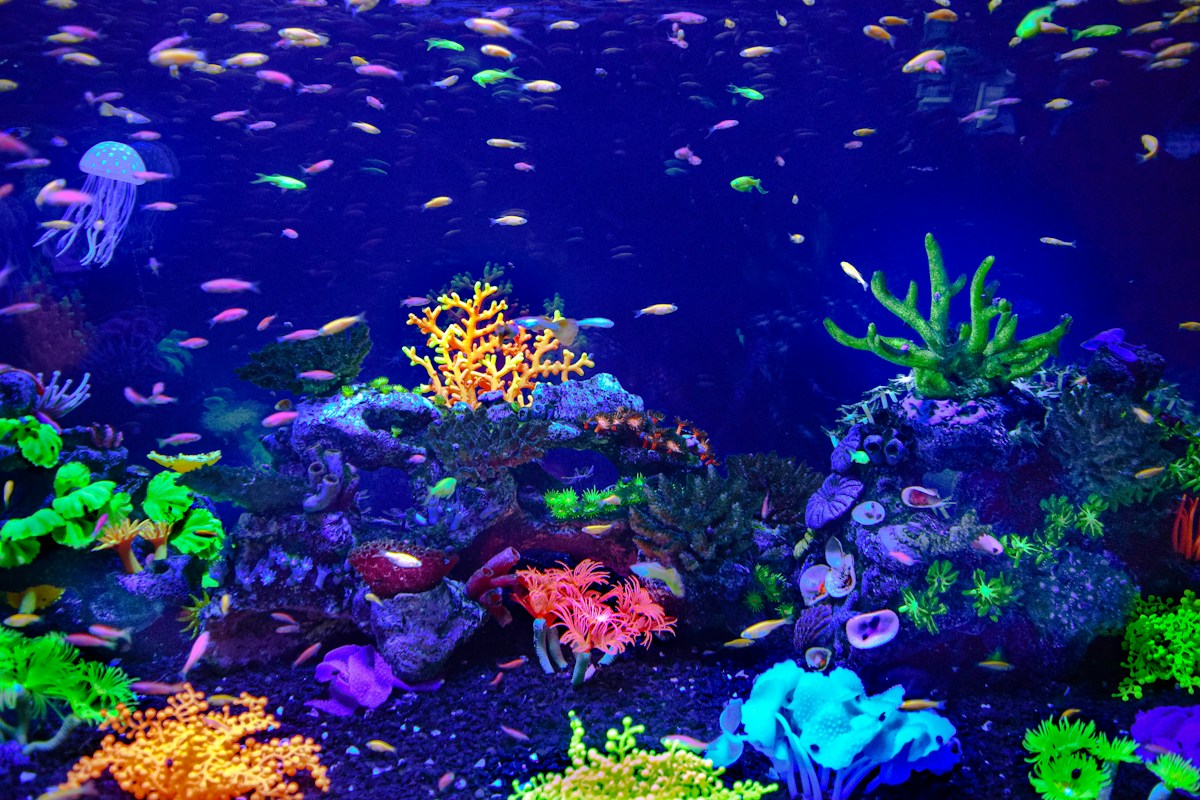
Evaporation is an inescapable thermodynamic reality in closed aquatic ecosystems. Driven by ambient room temperature differentials, high-output lighting thermal dissipation, surface circulation agitation, and room dehumidification, liquid water continuously escapes the aquarium into the surrounding atmosphere as pure water vapor. While visually evident through lowering water lines and unsightly mineral ‘bathtub rings’ along upper glass borders, the hidden chemical consequences beneath the surface are far more dangerous to aquatic livestock.
When water evaporates from an aquarium, dissolved minerals, heavy metal salts, carbonate ions, and toxic metabolic byproducts do not evaporate with it; they remain trapped inside the vessel. Consequently, as water volume declines, the concentration of Total Dissolved Solids (TDS), General Hardness (GH), Carbonate Hardness (KH), and nitrates spikes dramatically. For sensitive softwater biotope fish, wild dwarf cichlids, and delicate Caridina shrimp, these chronic osmotic swings induce severe physiological stress.
The standard manual top-off routine – dumping several gallons of cold tap water into the tank once a week – compounds the trauma, subjecting livestock to rapid thermal shock, erratic pH swings, and abrupt osmotic dilution. Modern aquatic husbandry demands a continuous, automated solution: the Auto Top-Off (ATO) system.
By engineering automated optical liquid-level sensors, anti-siphon peristaltic pumps, fail-safe high-water cutoffs, and pure Reverse Osmosis water reservoirs, aquarists can lock aquarium water volume and ionic equilibrium into an unshakeable, laboratory-grade baseline.
The Osmotic Rollercoaster: Why Manual Top-Offs Stress Fish
To understand the necessity of automated top-off systems, one must evaluate the microscopic mechanics of aquatic cellular osmoregulation. Freshwater fish and aquatic invertebrates are hyperosmotic to their surrounding environment: their internal blood and cellular fluids possess a higher concentration of mineral salts and ions than the ambient water column.
Consequently, water naturally diffuses across their semi-permeable gill membranes into their blood, while vital ions continually diffuse outward. Fish expend significant cellular energy actively pumping ions back into their bodies via ATP-driven gill chloride cells to maintain cellular equilibrium.
When an aquarium evaporates by 10 to 15 percent, the ambient TDS rises steadily over several days. The fish cellular machinery slowly adjusts to this creeping concentration. If the aquarist then suddenly pours five gallons of fresh water into the tank in a single afternoon, the ambient TDS plunges within minutes. This rapid drop creates an acute osmotic differential: water violently rushes into fish cells via osmosis, causing red blood cells to swell and gill tissues to suffer severe edema.
The Tap Water Fallacy: Why Top-Offs Must Be 100% Pure RO/DI
A catastrophic mistake made by novice fishkeepers is replenishing evaporated water with municipal tap water. Tap water contains dissolved calcium carbonate, magnesium, and silicates. Adding tap water to replace pure water vapor is an additive mineral process.
Over months, this practice continuously pumps new minerals into the aquarium without removing old ones, driving GH, KH, and TDS to extreme, unnatural heights. Evaporation top-offs must always and exclusively be performed using pure zero-TDS Reverse Osmosis Deionized (RO/DI) or distilled water, which simply replaces the pure $ molecules that escaped into the air.
ATO Sensor Technologies: Mechanical Floats vs Dual Optical Sensors
The heart of any Auto Top-Off system is the liquid level sensor, which monitors surface water elevation and commands the replenishment pump to cycle. Aquarists must choose between mechanical float switches and modern solid-state optical sensors.
Traditional mechanical float switches rely on a hollow plastic float containing a tiny magnet that slides vertically along a plastic stem to trigger an internal reed switch. While economical, mechanical floats are highly vulnerable to failure: crawling snails, climbing shrimp, calcium scale encrustation, or salt creep easily jam the physical float in the down position. When a float switch jams, the pump runs continuously, flooding the aquarium with fresh water, overflowing the stand, and causing catastrophic osmotic collapse.
Modern commercial ATO systems utilize infrared optical sensors. Optical sensors have zero moving parts: they emit an internal infrared beam that refracts out into water when submerged, or reflects back to an internal sensor when exposed to air. Premium ATO units incorporate dual or triple optical sensors housed inside a magnetic mount, backed by a secondary mechanical high-water alarm and smart software timers that cut power if replenishment exceeds 30 seconds.
Plumbing Hydraulics: Preventing Reverse Siphons
More aquariums have been flooded by simple plumbing siphons than electrical sensor failures. An Auto Top-Off system requires a dedicated freshwater reservoir (such as a 5 to 10-gallon plastic container or glass jug) containing pure RO/DI water, equipped with a small submersible pump or external peristaltic pump.
If the ATO discharge tube in the aquarium or sump terminates beneath the water line, a reverse siphon occurs the moment the pump shuts off, siphoning tank water backward into the reservoir and overflowing it. Conversely, if the reservoir water level is physically higher than the discharge tube, a forward siphon continues to pour water into the tank even after the pump powers down.
To eliminate siphon hazards, the ATO discharge tube must always terminate several inches above the highest water level in the aquarium, establishing an air gap break. Alternatively, an in-line mechanical anti-siphon check valve or siphon-break fitting must be spliced into the tubing.
Selecting the right Auto Top-Off hardware prevents catastrophic flooding and preserves delicate water chemistry. Review the comparative engineering matrix below.
Auto Top-Off (ATO) System Architecture Matrix
| ATO System Category | Sensor Architecture | Pump Type | Flood Safety Redundancy | Recommended Use |
|---|---|---|---|---|
| Dual Optical Solid-State | Infrared prism (Zero moving parts) | DC Diaphragm / Impeller | Optical secondary + Auto time-out cut | Planted tanks, rimless display aquascapes |
| Peristaltic Dosing Loop | Single or Dual Optical Sensors | Peristaltic Roller Head | Mechanical roller acts as positive check valve | Delicate Caridina nano shrimp tanks |
| Mechanical Float Switch | Magnetic reed float on stem | 12V Submersible Pump | None (High risk of snail jamming) | Budget breeding setups (requires snail guard) |
| Gravity-Fed Float Valve | Direct mechanical pressure arm | None (Gravity siphon feed) | Mechanical rubber seal can leak under pressure | Remote fish rooms; sump reservoirs |
| Direct RO/DI Solenoid Link | Dual Optical + High Level Float | Direct municipal line solenoid | Extreme flood hazard if solenoid fails open | Not recommended without drain floor basin |
Implementing an engineered Auto Top-Off guarantees unbroken water stability. Review the essential operational inquiries below.
Frequently Asked Questions About Aquarium Auto Top-Off Systems
Can you use tap water in an Auto Top-Off reservoir?
No. When water evaporates, only pure H2O leaves the aquarium, leaving all minerals behind. Adding tap water introduces new minerals with every top-off, steadily increasing water hardness and TDS to dangerous levels. Only use pure RO/DI water.
How does an Auto Top-Off prevent water line mineral stains?
By continuously replacing evaporated water in tiny millimeter increments throughout the day, the water level never drops, completely eliminating the white calcium crust that forms along the top glass.
What causes an ATO system to flood an aquarium?
Flooding occurs from snails climbing onto mechanical float switches, optical sensors becoming covered in thick algae, or siphoning caused by keeping the reservoir water level higher than the discharge hose.
How do you prevent an ATO siphon?
Always ensure the ATO discharge tube terminates above the water level with a clear air gap, or install a dedicated anti-siphon valve. Never submerge the discharge hose beneath the tank water line.
Why are optical sensors better than mechanical float switches?
Optical sensors use infrared light with zero moving parts, making them immune to mechanical jamming from snails, shrimp, or mineral buildup that routinely freezes mechanical float switches.
How long does a 5-gallon ATO reservoir typically last?
In an average 30 to 50-gallon aquarium, a 5-gallon reservoir will provide one to two weeks of automatic top-offs, depending on ambient room humidity and lighting heat.
Can an Auto Top-Off be installed on a rimless tank without a sump?
Yes. Modern compact ATO systems include magnetic mounts designed to clamp securely onto rimless glass panes as thin as 4 mm up to 15 mm, with the tiny sensor placed directly in the main display tank.
What is a smart ATO run-time limiter?
Smart ATO controllers track how long the pump runs. If the pump runs for more than 30 or 60 seconds (indicating a leak, dry reservoir, or sensor fault), the controller automatically cuts power and sounds an alarm.
Do I still need to do water changes if I have an Auto Top-Off?
Yes. An ATO only replaces evaporated water; it does not remove accumulated nitrates, phosphates, or dissolved organic carbon. Regular water changes are still mandatory to export waste.
Strategic Conclusion and Hydrological Balance
The Auto Top-Off system is the unsung guardian of water parameter stability in the modern aquarium. By automating the continuous replacement of evaporated moisture with laboratory-grade RO/DI water, aquarists eliminate the violent osmotic shock cycles inherent in manual bucket top-offs. Operating silently behind the scenes, an engineered ATO protects delicate aquatic membranes, banishes mineral crusting, and liberates the keeper to enjoy their aquatic world in perfect peace.
For more technical documentation on closed aquatic system hydraulics and parameter stability, examine resources at the Food and Agriculture Organization Aquaculture Technical Papers, research from the University of Florida IFAS Extension, and aquascaping husbandry standards at the Aquatic Gardeners Association.