

The Mystery of the Foggy Tank
I know exactly how it feels. You have worked very hard to set up your aquarium, you have picked out your favorite decorations, and then—almost overnight—the water turns into a foggy, milky mess. It is one of the most frustrating things for any new hobbyist to deal with. When I first started keeping fish, I remember staring at my cloudy tank and feeling like a total failure. I thought the water was “dirty,” so I tried to scrub everything, which actually only made the problem worse.
At Aquadolf, I want to help you avoid that stress. In this guide, I am going to explain exactly why your water is cloudy and, more importantly, how you can fix it using simple steps. I will talk to you like I am standing right next to your tank, sharing the professional secrets I have learned over many years. Whether you are a student or a busy adult, these tips will help you get that crystal-clear water you have been dreaming.
Phase 1: Play Detective with the Color of the Cloud
Before I can tell you how to fix the problem, we have to find out what is causing it. Not all cloudy water is the same. I always tell my students to look at the tank from the side. The color of the “fog” tells us exactly what is going wrong inside your ecosystem.
1. The White or “Milky” Cloud
This is the most common issue for beginners. It looks like someone dropped a tiny bit of milk into the water. If your tank is brand new (less than six weeks old), this is almost certainly what you are seeing. It can happen overnight, even if the water was perfect the day before.
2. The Green “Pea Soup” Cloud
If your water looks green, you are dealing with an algae explosion. This usually happens in tanks that get too much light or have too much “food” for plants in the water. It can get so thick that you can barely see your fish.
3. The Brown or “Dirty” Cloud
If the water is clear but has a “tea” or “honey” color, or if you see tiny bits of dust floating around, it is usually caused by the physical things you put inside the tank, like new gravel or a piece of wood.
Phase 2: Fixing the White “Bacterial Bloom”
If your water is white and milky, you are experiencing what I call a “Bacterial Bloom.” I know that sounds like a scary science word, but it is actually a very natural part of a tank “growing up.”
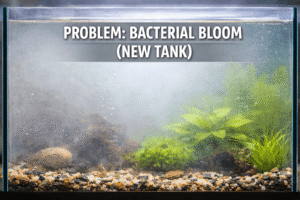
What is happening? Inside your filter and your gravel, you are trying to grow “Good Germs” (which we call Beneficial Bacteria). These germs are the heroes of your tank because they eat the fish waste. When a tank is new, these germs haven’t found a home yet. They float around in the water and multiply by the millions, which makes the water look white and foggy.
My Professional Advice:
The best thing you can do for white water is actually to do nothing. I know that is very hard to hear! You want to “clean” it, but every time you change the water, you are actually removing the very germs that are trying to help you.
-
The Solution: Wait. In almost every case, the white cloud will disappear on its own in 3 to 5 days once the germs finally settle into your filter.
-
The Mentor’s Secret Tip: If you see your fish gasping for air at the top, you should add an air stone or a bubble maker. These bacterial blooms can use up a lot of the oxygen in the water, and your fish need a little extra help breathing while the water clears up.
Phase 3: Fixing Green “Algae” Water
Green water is caused by tiny, microscopic plants called algae. Algae only needs two things to take over your tank: Light and Food.
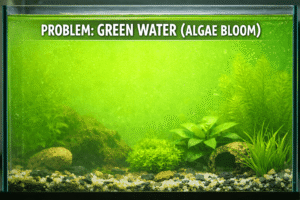
How to Fix It:
-
Check Your Lights: Are you leaving your aquarium lights on for 12 hours? That is way too much. I recommend only 6 to 8 hours of light a day. I suggest buying a simple $10 light timer so you don’t have to remember to turn the switch off.
-
The Window Test: Is your tank near a window? Direct sunlight is like rocket fuel for algae. If you can’t move the tank to a darker corner, you should close the curtains during the day.
-
The Blackout Trick: If the green color is really bad, I use the “Blackout Method.” Turn off the lights and cover the tank with a heavy blanket for 3 days. Your fish will be perfectly fine in the dark, but the algae will die without the sun. It is a very effective and free way to clean your water!
Phase 4: Fixing Brown or “Tea-Colored” Water
Sometimes, your water isn’t actually “cloudy,” it is just tinted. If you have a real piece of wood (driftwood) in your tank, it releases something called Tannins.
Is it safe? Yes! In fact, I often keep my own tanks this way. Tannins act like a natural medicine for your fish. However, I know that many people want their water to be crystal clear like a window.
The Fix:
-
Activated Carbon: Put a bag of fresh “Activated Carbon” in your filter. It acts like a chemical sponge and will soak up that brown tea color in about 24 hours.
-
Rinse Your Gravel: If the water looks “dusty” or gray, it means you probably didn’t wash your gravel enough before you put it in. You can fix this by adding a “Fine Filter Pad” (which looks like cotton) to your filter to catch the tiny dust particles.
My Professional Secret to Crystal Clear Water
Once your water finally becomes clear, you want it to stay that way. I have a few “Golden Rules” that I follow in my own home to make sure my tanks always look perfect.
1. The “Two-Minute” Feeding Rule
I cannot say this enough: Overfeeding is the #1 cause of cloudy water. If you give your fish too much food, they won’t eat it all. The extra food falls into the rocks and rots. This creates “Bad Germs” that turn the water gray and smelly.
2. Never Rinse Your Filter in the Sink
This is the mistake that kills the most fish. Tap water has chlorine, which is a chemical that kills the “Good Germs” in your filter.
-
The Expert Way: When I clean my filter, I fill a bucket with water from the aquarium itself. I rinse the sponges in that bucket. The sponge will still look a little brown, but the Good Germs stay alive and your water stays clear.
3. Use Live Plants
I am a huge fan of live plants like Hornwort or Java Fern. These plants eat the “food” (nitrates) that would otherwise feed the algae and bad bacteria. They are like a second filter that works for you for free!
Understanding the “Invisible” Cloud
One thing I always tell my students is this: Clear water does not always mean clean water. The most dangerous things in your tank—Ammonia and Nitrites—have no color and no smell. Your water could look as clear as a diamond, but if those chemicals are high, your fish are in danger.
The One Tool You Need:
You cannot be a truly successful fish keeper without a Water Test Kit. I personally use the API Master Test Kit. It is like a science kit that tells you exactly what is happening in the water.
-
If your water is cloudy and your Ammonia test turns “Green,” your fish are in big trouble and need a water change.
-
If your water is cloudy but your tests show “Safe” colors, then you just need to be patient and wait for the cloud to settle.
3 Simple Maintenance Steps for Students and Beginners
If you are busy with school or work, you need a plan that is fast but works. Here is exactly what I do every week:
-
The Weekly “Sip”: Every weekend, I take out about 20% of the water (this is just 2 gallons for a 10-gallon tank). This removes the “fish poop” and adds fresh minerals to the tank.
-
The Glass Wipe: Use a magnetic glass cleaner to wipe the inside of the glass once a week. It is much easier to clean a little bit of green film now than to wait until the whole tank is covered in algae.
-
The Conditioner Check: I keep my water conditioner bottle right next to my fish food. I never, ever add tap water to my tank without using it first. This is a life-saving habit.
My Personal Experience: The “Soap” Disaster
I will tell you a true story about my very first tank. It turned cloudy, and I thought it was “dirty.” I took the fish out, put them in a small bowl, and I used a sponge from the kitchen to scrub the glass. I even used a tiny bit of dish soap because I wanted it to be “perfect.”
It was a disaster. Soap is a chemical that ruins a fish’s ability to breathe. I lost every single one of my fish that day. It broke my heart, but it taught me a lesson I will never forget: An aquarium is a living ecosystem, not a kitchen plate. You don’t need soap; you need balance. If your water is cloudy, don’t reach for the scrub brush—reach for your test kit and your patience.
Conclusion: You’ve Got This!
Cloudy water is just a “growing pain” for your aquarium. It happens to everyone—from students starting their very first tank to experts who have 50 aquariums in their house.
By identifying the color of the cloud and following the simple fixes I have shared with you today, you are taking control of your tank. Remember: do not overfeed, watch how many hours your light is on, and be patient with the “Good Germs.” Your water will be crystal clear before you know it.
If you have a specific problem with your water, please leave a comment below! I personally read every single one and I am here to help you succeed with Aquadolf.