


The Silver Rocket of the Aquarium
If you have ever walked through the fish aisle and seen a group of sleek, silver fish with black-edged fins zipping through the water like tiny torpedoes, you were likely looking at a Bala Shark (Balantiocheilos melanopterus). I remember the first time I saw them as a student; I thought, “I can finally have a shark in my room!”
But here is the first thing I want you to discover: the Bala Shark is not a shark. It is actually a member of the carp and minnow family. They are called “sharks” only because of how they look, not how they act. Unlike the scary sharks in the movies, Bala Sharks are peaceful, shy, and very social.
However, there is a reason I call them the “Silver Rocket.” They are fast, they are powerful, and they grow much larger than most people expect. In this guide, I am going to share the professional technical guidance you need to keep these beautiful fish happy, while being honest about the space they truly require.
The “Small Fish” Illusion
At the pet store, Bala Sharks are usually sold when they are only 2 or 3 inches long. They look perfect for a 10-gallon or 20-gallon “beginner” tank. This is the “Unknown” trap that catches many hobbyists.
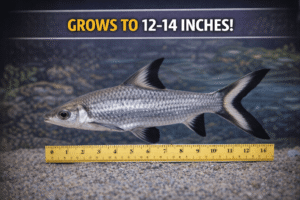
How Big Do They Really Get? In my years of experience and research, I have seen Bala Sharks grow to a massive 12 to 14 inches.
-
The Problem: They don’t just grow long; they stay very active. A fish that is 12 inches long and swims at high speeds needs a lot of “runway” to move.
-
The Growth Rate: They grow steadily. That cute 2-inch fish will likely be 6 inches within the first year and keep going.
The Rule: If you are a student with a small desk tank, the Bala Shark is a fish to admire at the store, but not to take home yet. They are a “long-term” commitment for a very large aquarium.
The “Schooling” Requirement (Friends are Mandatory)
One of the most important things to discover about the Bala Shark is its social life.
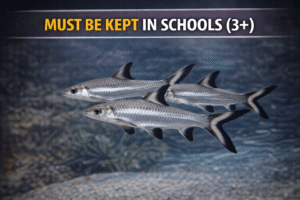
Never Keep Just One: In the wild, Bala Sharks live in large groups. I have seen many people buy just one Bala Shark, and the result is almost always a stressed, hiding fish that doesn’t eat well.
-
Professional Advice: You must keep them in a group of at least 3 to 5.
-
The Conflict: This creates a big challenge for the owner. If you have five fish that each grow to 12 inches, you need a massive amount of water to keep them healthy.
The “Monster” Tank Setup
Because Bala Sharks are “Rockets,” the design of their home is a matter of life and death.
1. Tank Size (The Minimum)
For a school of adult Bala Sharks, I recommend nothing less than a 125-gallon tank (6 feet long).
-
Why 6 feet? Because they are easily “spooked.” If a door slams or a light turns on suddenly, they will bolt across the tank. In a short tank, they will hit the glass at high speed, which can cause permanent damage to their snouts or even kill them.
2. The Tight Lid (The “Jumper” Warning)
Bala Sharks are world-class jumpers. I have seen them clear the water by several inches when they are scared.
-
Technical Guidance: You must have a heavy, tight-fitting lid with no gaps. If there is a hole for a heater or a wire, a Bala Shark will find it. I always use lid clips to make sure they stay inside.
3. Open Swimming Space
While plants and wood look nice, Bala Sharks need the “middle” of the tank to be empty. They need a straight path to swim back and forth.
-
Mentor Tip: Place your tall plants and rocks at the back and sides, leaving a “highway” in the center for your silver rockets.
Feeding the Silver Rocket
Bala Sharks are not picky eaters, but they are “Omnivores,” which means they need both meat and greens to stay shiny.
The Professional Menu:
-
High-Quality Flakes and Pellets: This is the base of their diet.
-
Frozen Foods: They love bloodworms, brine shrimp, and daphnia.
-
Vegetables: I find that giving them blanched spinach or shelled peas helps keep their digestion moving and prevents “bloat.”
-
The “Clean” Rule: Because they are large and active, they eat a lot. Any food they don’t eat will rot and ruin your water quality. Only feed them what they can finish in 2 minutes.
Choosing Tank Mates for a Peaceful Giant
Because Bala Sharks are so peaceful, they can live with many different fish—as long as those fish aren’t small enough to be swallowed!
Good Neighbors:
-
Other Large Barbs: Tinfoil Barbs (if you have a truly massive tank) or Rosy Barbs.
-
Gouramis: Larger species like the Three-Spot or Pearl Gourami.
-
Rainbowfish: Their bright colors look amazing next to the silver of the Bala Shark.
-
Peaceful Cichlids: Like the Severum or Blue Acara.
Fish to Avoid:
-
Tiny Fish: While they aren’t “aggressive,” a hungry 12-inch Bala Shark might accidentally eat a 1-inch Neon Tetra.
-
Mean Bullies: Avoid aggressive Cichlids like Oscars or Jack Dempseys, as they may bully the shy Bala Shark.
Water Chemistry and Health
Bala Sharks are quite hardy, but they are very sensitive to “new” water.
1. The Maintenance Plan – I recommend a 25% water change every week. They produce a fair amount of waste, and they thrive in oxygen-rich water. Use a high-quality “Powerhead” or an extra “Air Stone” to keep the water moving.
2. The Water Parameters:
-
Temperature: 72°F to 82°F. They like a stable, tropical temperature.
-
pH: 6.5 to 7.8. They are very flexible as long as the pH doesn’t jump around.
3. Common Illness: The “Spooking Injury” The biggest health risk for a Bala Shark isn’t a germ; it’s an injury. If you see a red mark on their nose, it means they have been hitting the glass.
-
The Fix: Add more hiding spots (like large driftwood) and check if the tank is in a high-traffic area (like near a hallway) where people are constantly running by.
The “Shark” Dream
I know how cool it is to tell your friends, “I have sharks in my room.” But a true aquarist puts the fish’s health before their own “cool factor.”
At Aquadolf, I want you to be the kind of keeper who researches first. If you have a 20-gallon tank, don’t buy a Bala Shark. Instead, look for “Silver Tip Tetras”—they have a similar color and energy but stay small and happy in your current tank. Save the Bala Shark for the day you get that 125-gallon “dream tank.”
3 “Unknown” Facts to Discover About Bala Sharks
-
They are Endangered: In the wild (Southeast Asia), the Bala Shark is actually an endangered species. Most of the fish you see in stores are “Tank-Raised,” which helps protect the wild population.
-
They Make Sounds: Believe it or not, some owners have reported hearing a “clicking” or “popping” sound coming from their tank when Bala Sharks are feeding.
-
The “Black Edge”: The black line on their fins is a sign of health. If that black starts to fade or look gray, it is an early warning sign that your water quality is dropping.
Respect the Silver Rocket
The Bala Shark is a majestic, peaceful, and beautiful addition to a large aquarium. They bring a level of energy and “flash” that few other fish can provide. But they are not “beginner” fish in terms of space.
If you are eager to discover the world of these friendly sharks, remember the three keys: Space, Schools, and Stability. If you provide those, your Silver Rockets will thrive for 10 years or more.
Are you thinking about upgrading your tank for a school of Balas? Or did you buy one and realize it’s getting too big too fast? Leave a comment below! I am here to provide the resources and guidance you need to make your “Shark” dream a success.